Coffee Shop Mugs Wholesale: Buying for Chains and Independent Cafés
- Share
- Issue Time
- Sep 26,2026
Summary
A café buys cups the way it buys beans — repeatedly, across sites, with a chain standard that has to hold. The wholesale part is not about getting the lowest unit price; it is about being able to reorder one size, in one colour, eighteen months later.
The Problem: Four Drinks, One Shelf, Many Reorders
A coffee menu needs at least three cup sizes — an espresso cup, a cappuccino cup and a latte mug — and a shop opens all day, every day. Buying wholesale solves the volume, but it creates a different problem: a wholesale order locks a shape and a glaze into the future. The wholesale conversation that matters is therefore not the unit price; it is whether the same item can be reordered, in the same colour, when a shop drops a tray in month fourteen.
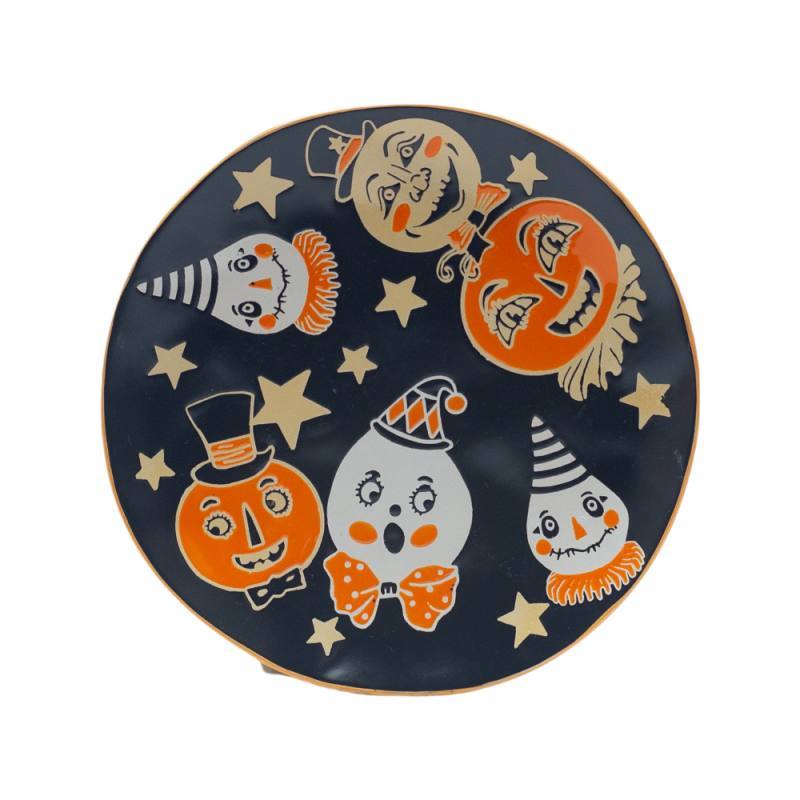
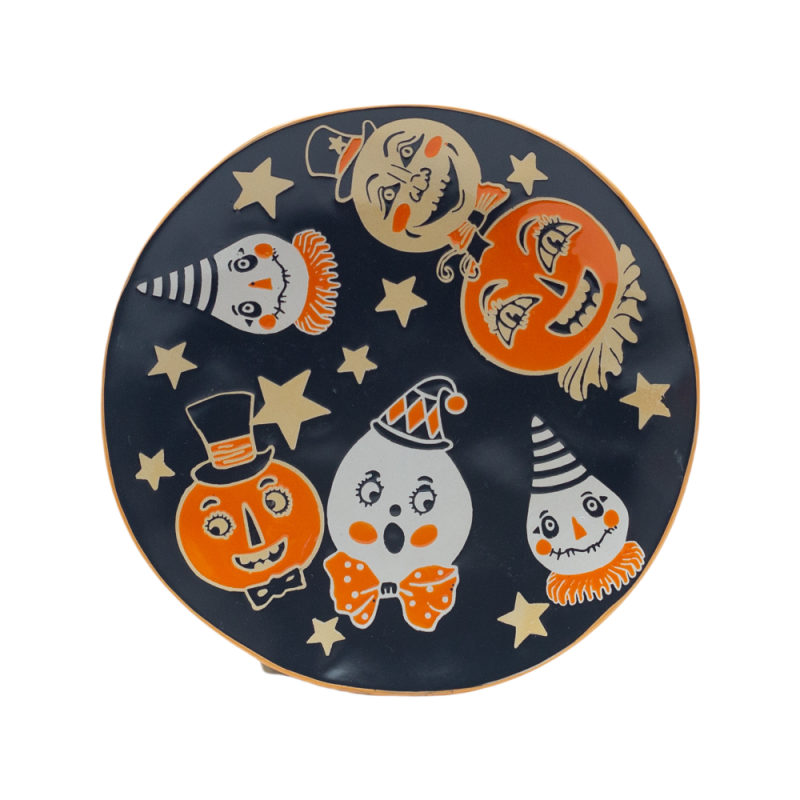
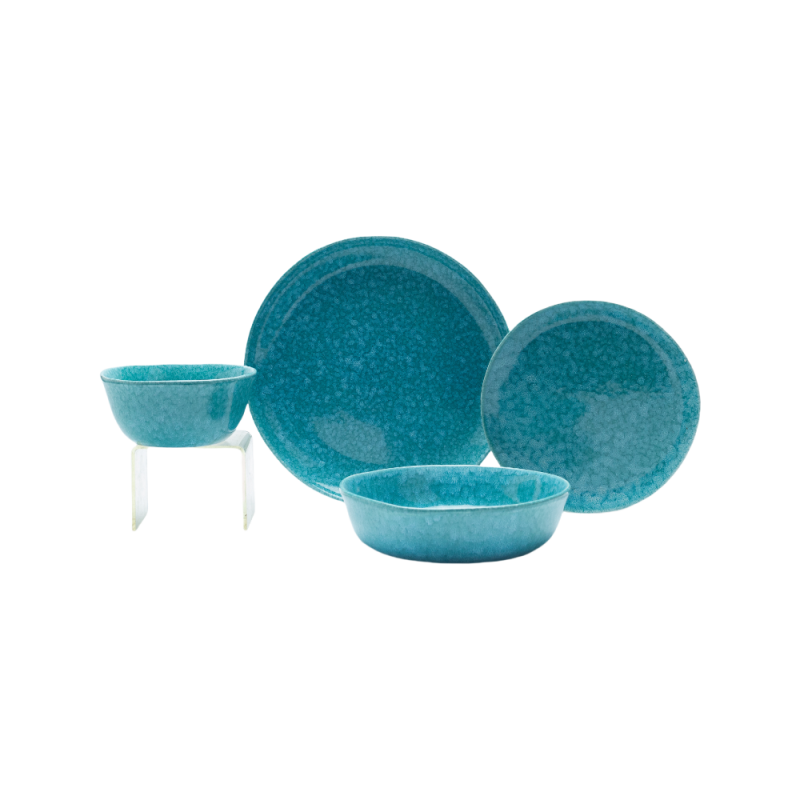
Products in this guide: Whimsical Halloween Ceramic Plates · Reactive Glaze Stoneware Plate
Sizes Per Drink, Not per Catalogue
A practical coffee set maps to the menu: espresso 60-90 ml, cappuccino 150-180 ml, flat white 160-180 ml, latte 220-350 ml, plus a filter mug for brewed coffee. Buying sizes that do not match the menu creates dead stock — the most common wholesale mistake in this channel, because catalogue minimums push buyers into sets they cannot use. A supplier who can split a wholesale order across the sizes the menu actually needs is worth more than one offering a marginally lower price on a fixed set.
The rim decides the drink. A latte is presented and drunk through a rim; a cappuccino needs a wide mouth for the foam pattern; an espresso cup is small, thick-walled and holds heat. If the same glaze family covers all three, the table reads as one brand — which is the chain's real requirement.
What Wholesale Means in Practice
Three terms should be explicit in a wholesale agreement:
Price tiers by quantity — normally stepped at fixed volume points, quoted per size, not per set. A reorder price and lead time — the price of the second order is the number that matters in month fourteen, not the first. A single-piece or mixed-size reorder option — because breakage and growth are never in round numbers; a supplier who forces a full-set reorder on every top-up transfers their efficiency problem onto the café's shelf.
Chain Consistency
A chain adds sites. Each new site needs the same cups as the first — and that is where wholesale programmes quietly fail: the factory changes a glaze, a colour shifts, or the handle mould is retired. The specification that protects the chain is a retained standard sample per size and a written body and glaze commitment for the programme life. This costs nothing extra and is the difference between an unbranded matching table and a patched-together one.
Stacking, Handles and the Dishwasher
Back-of-house reality: cups stack on a shelf, go through a commercial glasswasher several times a day, and get picked up hundreds of times a week. The brief should state nesting height, a handle that clears adult fingers, a rim profile that does not chip under stacking, and a tested dishwasher cycle count. Fired decoration is the version that survives; surface print fades and then reads as poor quality rather than well-loved.
Questions to Ask a Supplier
- Can the wholesale order be split across the three or four sizes on our menu?
- What are the quantity tiers per size, and what is the reorder price in month fourteen?
- Is there a retained standard sample, and is the body and glaze committed for the programme life?
- What is the tested nesting height and dishwasher cycle count?
- Is the logo decoration fired, and where does it sit relative to the rim?
- Can single sizes be reordered without a full-set minimum?
The spec freeze guide explains how artwork and packing files are locked between orders.
What to Put in the Order
- Sizes mapped to the menu, with capacity per size.
- Quantity tiers per size, plus the reorder price.
- The glaze family and body commitment, with a retained sample.
- Nesting height, handle clearance and dishwasher cycles, tested.
- Fired logo decoration, positioned away from the rim.
The packaging guide explains how retail-ready and protective layers are specified together.
The Habit That Ties It Together
The habit is to buy the menu, not the set — and to write the reorder terms into the first order. Cafés that do this keep every site matching, and treat breakage as a line item instead of an emergency.
Related Products
Explore products featured in this guide:

Have questions? See our Sizes & Finishes FAQ and Ordering & Certifications FAQ.
Need a custom quote? Send an inquiry or browse our full product catalog.