Designing a Pair: How Two-Mug Gift Sets Are Actually Structured
- Share
- Issue Time
- Sep 13,2026
Summary
A couple's gift is sold as a pair, but a pair is not two single mugs — it changes the body choice, the packing, the carton count and the price point. This guide explains the four structures that work and how to lock one down.
The Problem: A Pair Is Not Two Singles
The brief arrives as "two mugs in a gift box", and the quotation comes back higher than expected, because the factory has had to treat it as a new product rather than as two of an existing one. That is the correct response. A pair introduces decisions that singles do not: whether the two pieces share a body, how they are related by colour, how they are held together in the box, and whether the pair is one reference or two. Buyers who settle those questions before the enquiry get a cleaner price and a repeatable product. Buyers who leave them open get a quotation with assumptions in it, and a first shipment everyone interprets differently.
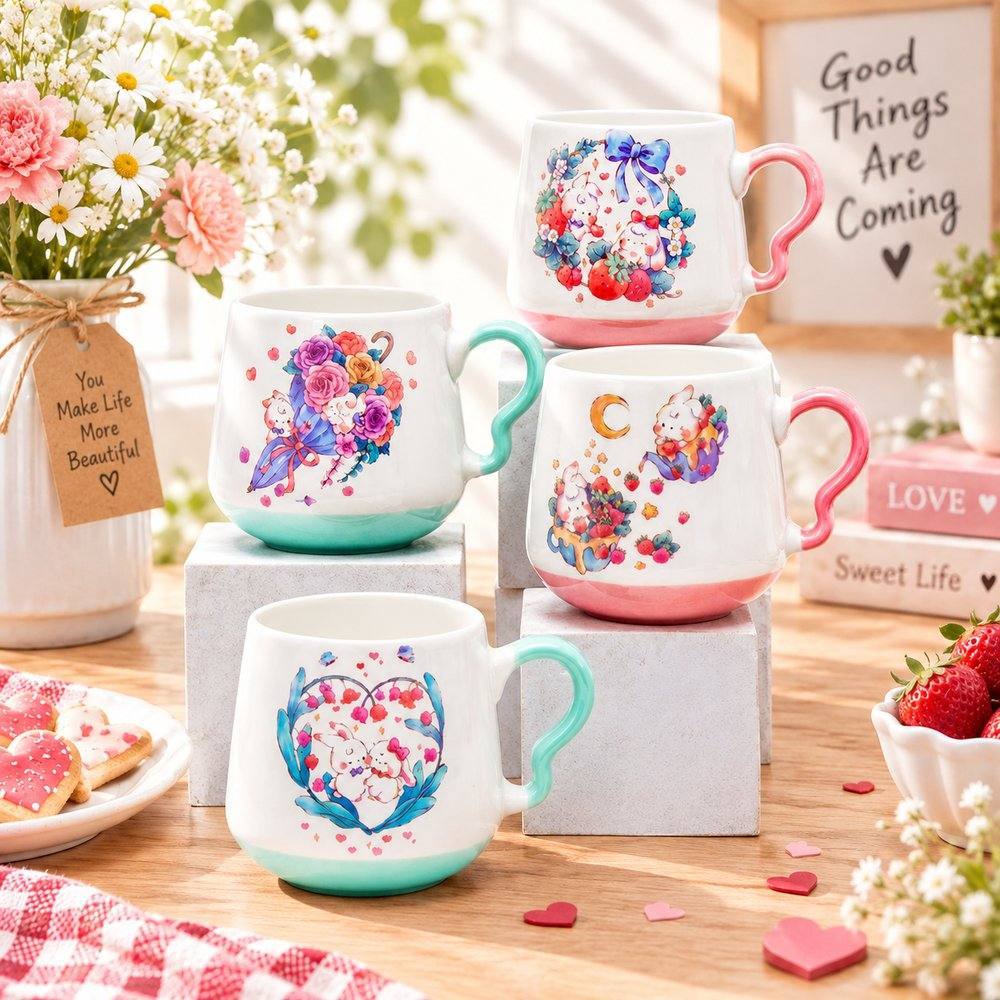
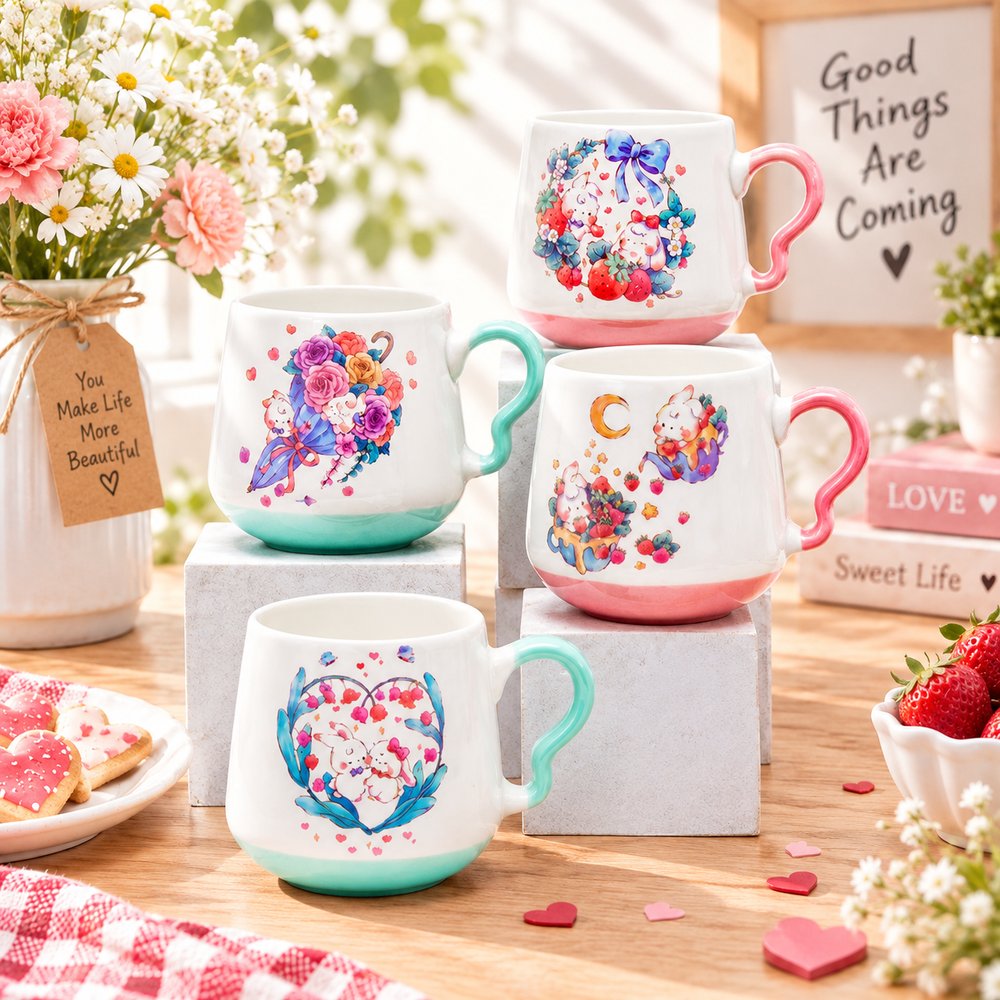
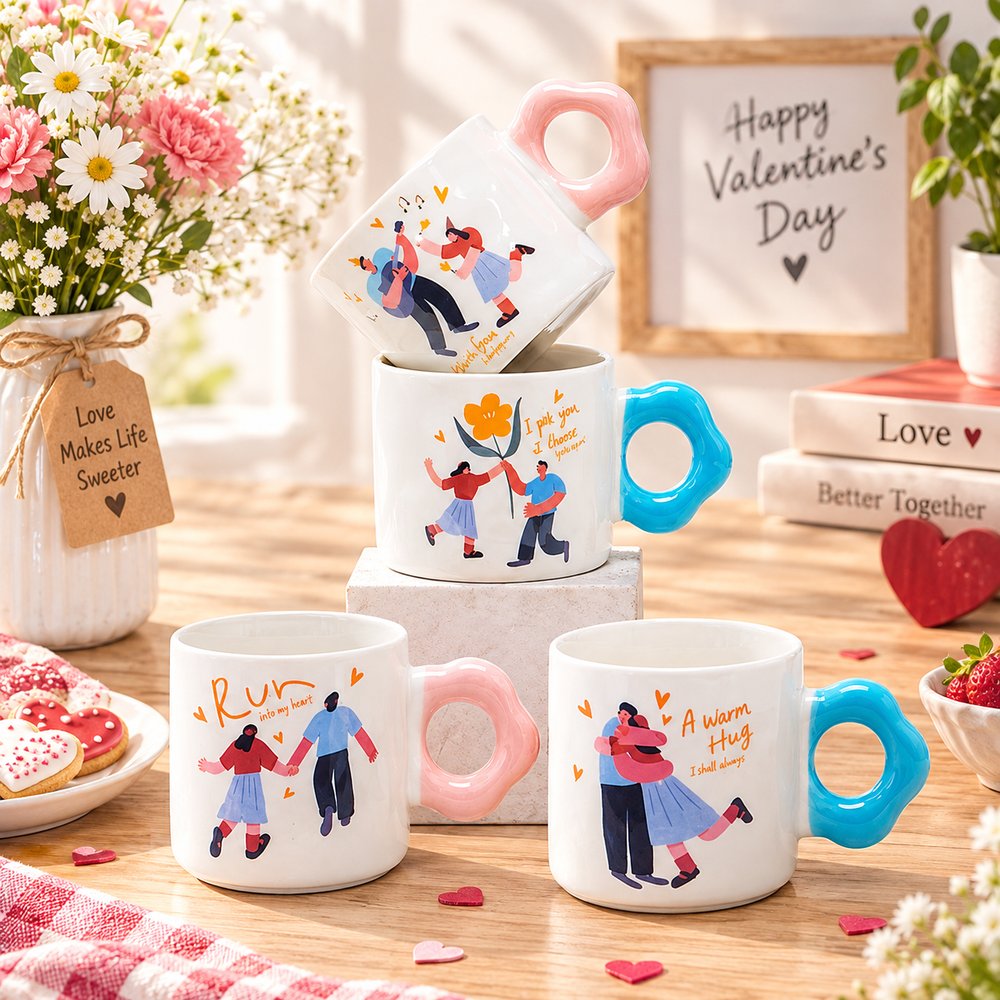
Products in this guide: Pastel Bunny Ceramic Mug 420ml · Couple Illustration Ceramic Mug 318ml
Where This Fits in the Sourcing Chain
A pair set is a specification problem: once the structure is chosen, it must be frozen so the second order matches the first. The spec freeze guide explains how artwork and packing files are locked between orders. It is also a packing problem, because the box is half the gift. The packaging guide explains how retail-ready and protective layers are specified together. And the physical reference — the sealed sample that defines what the pair looks like — is what makes the repeat possible at all. The master sample guide explains how sealed references keep batches identical. The full chain follows the standard sourcing map. See the full ceramic sourcing process map.
The Four Structures That Work
Same body, different colour. One mould, two glazes or two decorations, sold together. The cheapest pair to produce, because tooling and packing are shared, and the most common structure for Valentine's and anniversary sets. The design risk is that the two colours must look deliberate together rather than accidentally mismatched.
Same body, complementary decoration. One mould and one colour family, with two different prints that complete each other — a pair of illustrations, two halves of a message, or a his-and-hers motif. The strongest gifting story, because the two pieces are only complete as a pair.
Different bodies, one identity. A mug and a smaller cup, or a mug and a saucer, held together by the same glaze and decoration. This reads as a set rather than a pair, and it suits higher price points — but it means two moulds, two packing items and two stock lines.
Same body, stacked pair. Two mugs designed to nest or stack for storage and shipping. Space-efficient and popular with buyers who pay attention to freight, but the body must be designed for it from the start; it cannot be added later.
The Details That Decide Whether It Sells
Four small decisions carry most of the perceived quality. Capacity pairing: two identical capacities is the safest, and a slight difference (for example 350 ml and 450 ml) reads as intentional only when the decoration makes it obvious. Handle and rim consistency: mismatched handles make a set look assembled rather than designed. Box window and insert: the insert is what stops the two pieces touching in transit, and a die-cut window is what makes the pair readable on a shelf. Colour matching between pieces: glazes vary between firings, so the pair should be produced from the same batch and specified as a matched pair, not as two independent approvals.
How a Pair Changes the Economics
Three effects. Tooling is shared where the body is shared, so the pair carries one mould instead of two. Packing is not shared: a twin insert and a gift box are new items with their own minimum, which is where the cost of a pair set actually sits. Cartons change: fewer pieces per carton than loose singles, which affects the pallet count and the freight per unit. None of these is a reason to avoid pairs — they are reasons to quote the gift box as part of the product rather than as an afterthought.
Locking It Down
Treat the pair as one reference with two components. The specification should name the body, the two decorations, the capacities, the matched-glaze requirement, the insert, the box and the carton count — and the sealed sample should be the pair in its box, not two loose mugs. The master sample guide explains how sealed references keep batches identical. The spec freeze guide explains how artwork and packing files are locked between orders. That single change removes the most common cause of a second order that does not match the first.
The Habit That Ties It Together
The habit is to design the pair forwards — body, relationship, box — instead of discovering the structure while packing. Programs that do this produce gift sets that photograph well, ship intact and repeat exactly. Programs that do not end up explaining to a retail buyer why the second delivery looks slightly different from the first.
Related Products
Explore products featured in this guide:

Have questions? See our Sizes & Finishes FAQ and Ordering & Certifications FAQ.
Need a custom quote? Send an inquiry or browse our full product catalog.