Drying and Warping: Controlling the Part of Production Nobody Inspects
- Share
- Issue Time
- Sep 20,2026
Summary
Warped bases, oval rims and a wobble on the table are decided in the hours a piece spends drying — long before any inspector sees it. This is what causes it, how to judge it, and what to write into the process.
The Problem: A Defect With No Traceable Moment
A warped base looks like a firing problem. An oval rim looks like a moulding problem. Both are usually drying problems, and drying is the part of the process that leaves the least evidence: the piece is formed, it sits, it dries, and nobody measures anything. By the time the defect appears, the water is gone and the cause with it.
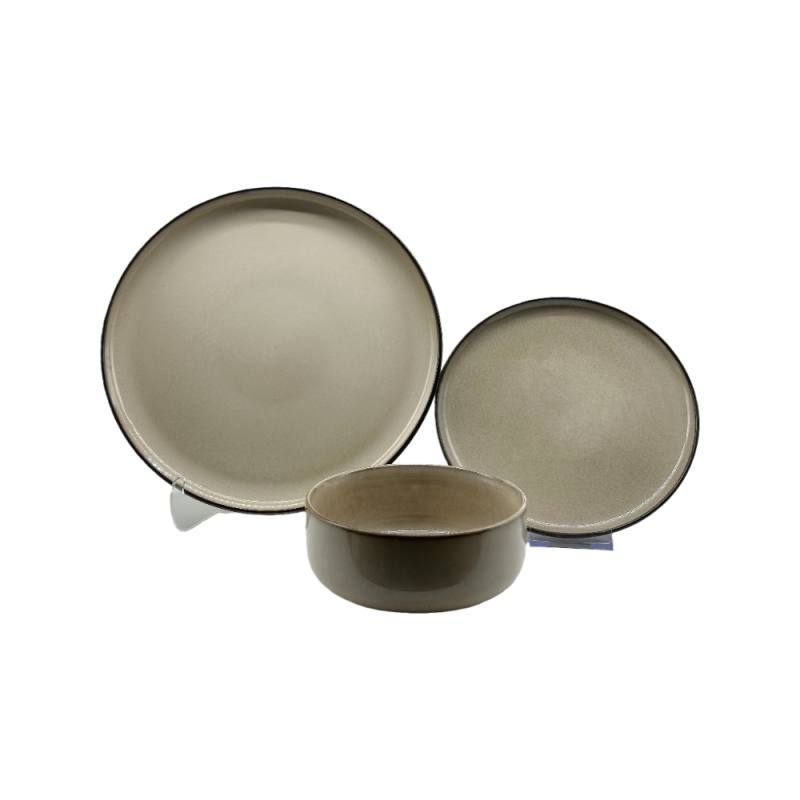
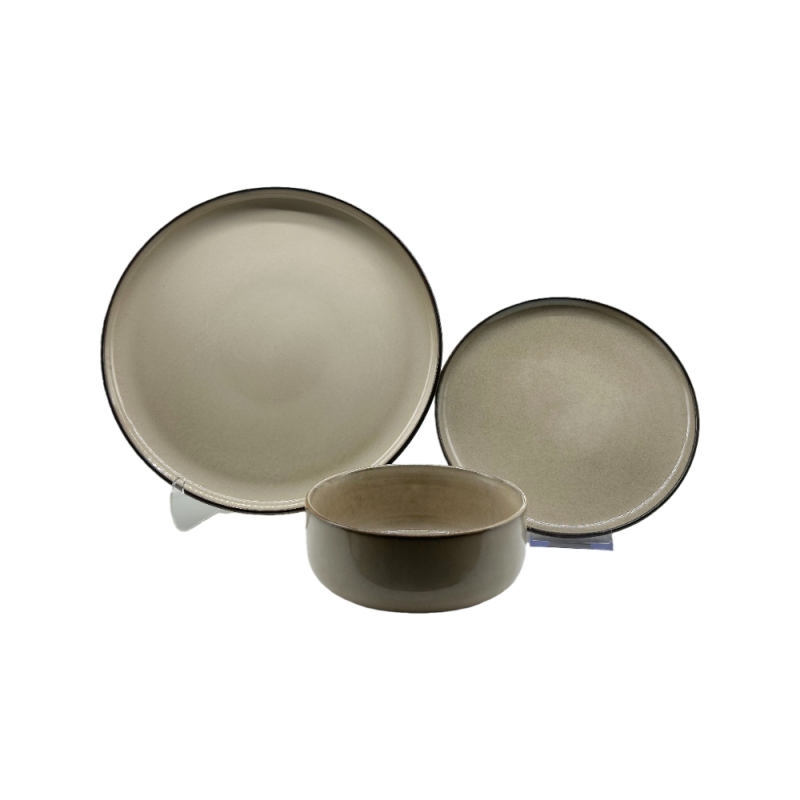
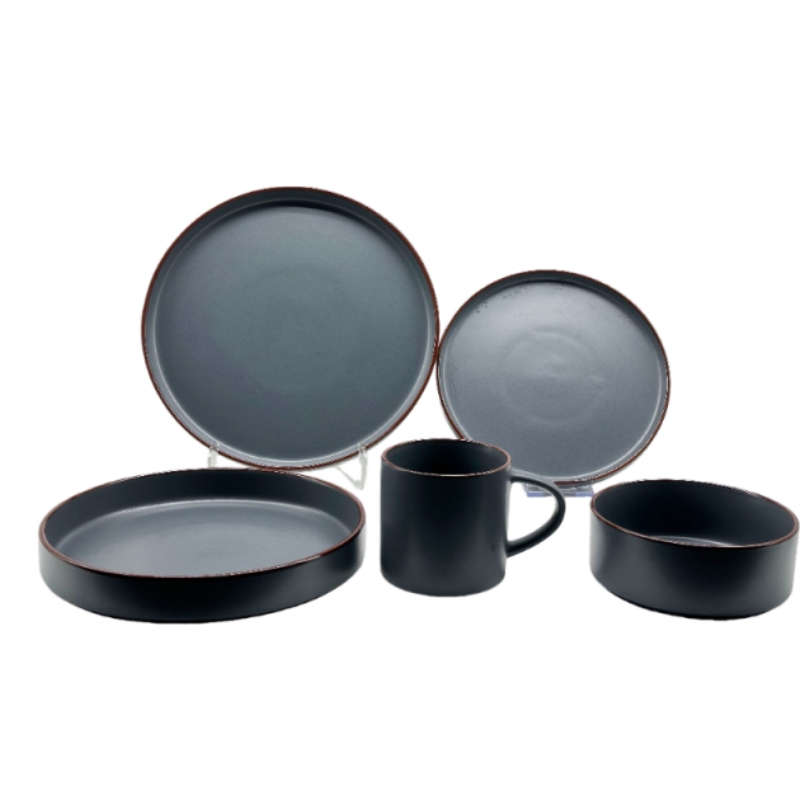
Products in this guide: 3-Piece Reactive Glaze Stoneware Dinner Set – Modern Ceramic Tableware for Everyday Dining · 5-Piece Matte Stoneware Dinnerware Set – Modern Black & Grey Plates
Three ways the defect reaches a customer. A wobble: the base is not flat, so the piece rocks on a table — the most noticed because it is felt immediately. An oval or out-of-round rim, where the top of the piece has distorted, and with it the lid fit on any covered item. A twist or lean, where the body has bent so that the handle or spout no longer lines up. All three are judgement calls that need a tolerance, because ceramics are never perfectly flat.
What Causes It
Uneven wall thickness. Thick and thin sections dry at different rates and shrink by different amounts, so a piece with a thin base edge and a thick wall pulls itself out of shape. This is the most common cause, and it is decided at forming.
Drying too fast. Rapid drying drives moisture out of the surface faster than it can migrate from the interior, creating a gradient. The surface shrinks first, the piece relieves the stress by moving, and the movement becomes permanent. A draught, a warm dry day and a full drying rack all accelerate it.
Drying unevenly. A piece standing in a draught, sitting on a solid board, or with its rim unsupported dries asymmetrically. The base dries from one side, the rim from another, and the result is a lean or a twist.
Retained moisture at firing. Loading a kiln before the piece is dry enough leaves water to be driven off quickly in the early part of the firing, which produces deformation at the exact moment the material is least able to resist it.
Kiln support and setting. A piece set crookedly, or fired on a support that does not hold the base flat, will deform under its own weight as the material softens. This is a real cause, but it is the last one to suspect and the first one blamed.
The spec freeze guide explains how artwork and packing files are locked between orders.
How to Judge It, So That It Can Be Accepted or Rejected
Warping needs a tolerance, and a tolerance needs a measurement. Four practical measures, all doable with simple equipment.
The wobble test. Place the piece on a flat reference surface — a machinist's flat, a glass sheet or a granite tile — and check whether it rocks. Then measure the gap at the point of lift with a feeler gauge or a thin shim. This converts a subjective impression into a number.
Base flatness measurement. Where a piece has a foot ring, check that the ring is continuous and in one plane. Many warps are in fact a foot ring that dips.
Roundness at the rim. Measure the rim diameter at two perpendicular axes, or wrap a tape around the rim and compare against the specification. An oval rim is a measurable quantity, and it is the characteristic that decides whether a lid will fit.
Flatness on a flat surface, for plates and dishes. A plate that rocks on a table is the same defect with a different name; the same reference-surface method applies.
The practical test for the buyer: pressure-test a small number of pieces on a flat surface at arrival, and record the count that rocks beyond the agreed gap. Where that figure is stated in the specification, both sides know what they are talking about.
Process Controls Worth Writing Down
Six controls, each addressing one of the causes above.
- A minimum drying interval between forming or handle joining and kiln loading, stated in hours, with attention to the season — a rule that works in winter fails in a dry summer.
- Controlled drying conditions: no direct draught, no direct heat source, consistent humidity. In practice, a drying room or a covered area with even airflow, rather than a rack next to an open door.
- Support during drying: drying boards that hold the base flat, and pieces set so that the rim is not carrying its own weight unsupported.
- A wall thickness tolerance, since the cause is often a forming issue. The same measurement discipline as elsewhere: a minimum wall and a base thickness, checked at defined intervals.
- A moisture check before firing. Where the factory will not measure, ask for a stated drying time; where it will, a moisture reading on a sample is a two-minute control that prevents a kiln-load of rejects.
- Kiln setting standards, including how pieces are supported during firing, written so that the practice survives a busy week.
The Commercial Consequence
Warping is not a single defect; it is a category that quietly inflates three cost lines: rejects at the factory (paid for in the price), claims at arrival (paid for in the relationship), and returns in the market (paid for in the review score). It is also the defect most resistant to detection by sampling, because a piece can pass a visual check and rock on a table.
Which is why the useful buyer's question is not whether the supplier has a flatness tolerance — most do not — but whether the item has a stated flatness figure, a stated drying interval and a defined test at arrival. Those three items cost nothing to add, and they convert an argument into a measurement.
The packaging guide explains how retail-ready and protective layers are specified together.
What to Ask a Supplier
Five questions, all answerable without a laboratory.
- What is the drying interval before firing, and does it change with the season?
- What is the measured wall and base thickness, and what is the tolerance?
- Is there a stated flatness figure for the base, and how is it checked?
- What is the reject rate for warping on this item, and what causes most of it here?
- When the last complaint about a rocking base came in, what did you change?
The Habit That Ties It Together
The habit is to treat drying as a controlled step rather than as waiting. Programs that do this ship bases that sit still on a table, rims that take a lid, and a lower reject rate that shows up in the price as well as in the review.
Related Products
Explore products featured in this guide:
Have questions? See our Sizes & Finishes FAQ and Ordering & Certifications FAQ.
Need a custom quote? Send an inquiry or browse our full product catalog.