Field Trial: Testing Ceramic Ware in Real Service Before You Commit to Bulk
- Share
- Issue Time
- Nov 4,2026
Summary
A sample is approved under a lamp, and a container arrives six months later. The step almost nobody writes down sits between those two events, and it is the only one that measures what a dishwasher, a bus tub and a barista will do to the glaze. Here is how to run a field trial that produces evidence instead of anecdotes.
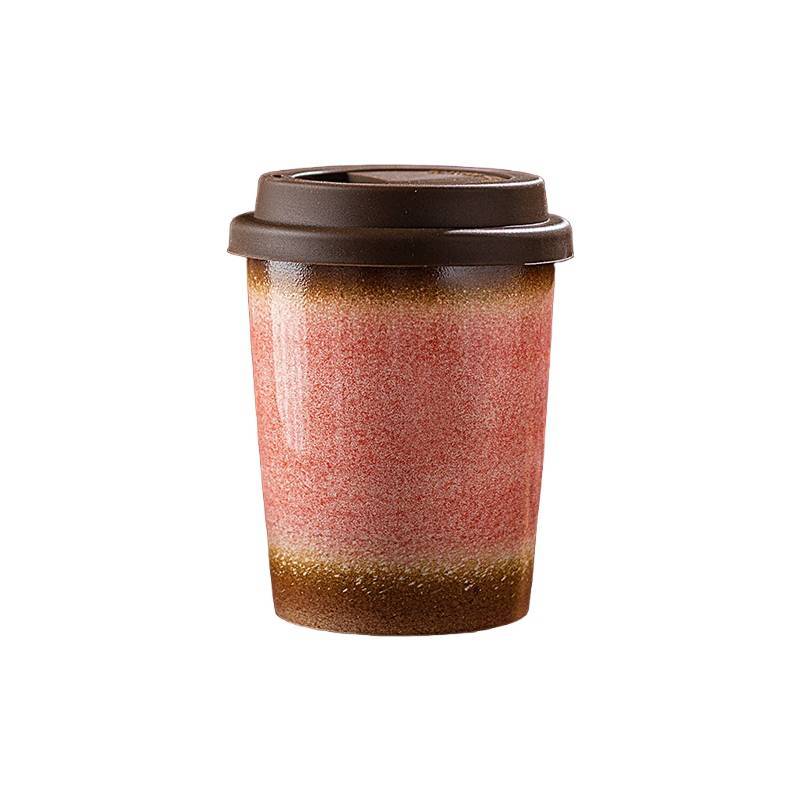
The sample is approved in a meeting room. Ten pieces on a white table, a lamp overhead, three people handling them carefully and turning each one over to check the base. Everyone agrees it looks right, the email goes out, and the order is placed.
Products in this guide: 290ml Reactive Glaze Ceramic Travel Coffee Mug with Lid · Ceramic Baking Bowl
Six weeks later the same mug is standing in a dish rack at the end of a service, warm, wet, about to be stacked with forty others. Nobody in that room tested for this moment, and nothing in the purchase order describes it.
The step between approval and a container is called a field trial, and it is the cheapest evidence in the whole programme. It is also the one most often skipped, because nobody specifies it and nobody owns it.
Approval happens in a room, failure happens in service
A sample review answers a narrow question: does this piece match the reference, in this light, at this distance, held by someone careful. It is a comparison of appearance, and the right test for appearance.
Service asks a different question. The piece is washed at a temperature nobody measured, with a detergent nobody specified, stacked while still warm and dropped into a tub from tray height.
Those are two different properties. A glaze can be perfectly matched and still stain. A handle can look correct and still loosen at the joint after a few hundred cycles. A body can pass a dimensional check and still chip at the foot ring every time it is set down hard on a stainless counter.
The gap between the two is where most of the disappointment in a first bulk order lives, and it is measurable in advance with a quantity small enough to fit on a shelf: The master sample guide explains how sealed references keep batches identical..
What a field trial is not
A sample review is too short, too few pieces, outside service. A trial order tests whether a supplier can ship, not whether the product survives. A laboratory test accelerates one property on a handful of specimens. A customer survey collects opinions without a failure record.
A field trial is the only one that puts the actual piece into the actual routine, for long enough that the routine does something to it. It answers one question: what breaks first, and how often.
Five numbers that define the test
Write these down before the first piece leaves the warehouse.
- Pieces per site. Enough that one failure is not the whole result, few enough to stay traceable: a few dozen per site, every piece coded.
- Sites. Three is a reasonable minimum, chosen for intensity rather than convenience: one busy counter, one quieter service, one where handling is rough.
- Duration. Long enough to cover repeated washing and stacking. Six to eight weeks reaches the fast failure modes; anything shorter measures appearance again.
- Service conditions. Normal service, no special care and no special detergent. The moment trial pieces are treated better than the rest, the result is void.
- Recording rhythm. One sheet per site per week, filled in on the same day, by the same person where possible.
What to record
The sheet is where a trial becomes evidence. Keep it to one page.
- Edge damage. Count chips at the rim, the foot ring and the handle junction separately, as a number per week rather than an impression.
- Handle condition. Movement at the joint, a change in the sound when tapped, and any piece set aside because it felt loose.
- Glaze behaviour. Crazing lines, tea and coffee staining on the interior, and grey cutlery marks on the face.
- Handling comments. What staff say about weight, balance and grip, written in their words on the day, not summarised later.
- Breakage. Where it broke and how: dropped, stacked, washed, knocked in the tub. Cause matters more than count.
- Customer remarks. Complaints, refusals and the occasional unprompted compliment, with the date.
- The control. Your current ware, on the same sheet, in the same site, in the same weeks.
Blind codes, one variable at a time
Two candidates compared side by side will be judged by the label unless the label is removed. Code the pieces, keep the code with one person, and do not tell the staff which is new.
Then change nothing else. If the detergent changes halfway through, or the site hires new staff in week three, the comparison is over and the eight weeks were a hobby.
Run the incumbent as the control in the same period. A trial that compares new ware in March against old ware from last winter is comparing seasons, not products.
How long before the answers arrive
Failure modes keep different clocks, which is why one duration cannot cover all of them.
Chipping at the rim and the foot appears early, because contact starts on day one. Crazing and staining show within the first weeks of washing. Handle fatigue and glaze wear take longer, and often only become visible in the first bulk batch.
So treat the trial as two stages. The first six to eight weeks decide whether to place the order. The first bulk delivery continues the same record, and if the bulk batch behaves worse than the trial pieces, that difference is the most useful quality conversation available.
Reading the result against your own ware
There is no universal number for acceptable chipping, and quoting one would be inventing a standard. The only meaningful baseline is the ware the site already uses.
Set the rule before the trial starts: if the candidate chips more than the incumbent on the same sheet over the same weeks, it does not scale. Write the threshold down, agree it with whoever signs the order, and resist moving it afterwards.
Then read the sites separately instead of averaging them. A failure rate that looks tolerable across three sites can be one site failing badly and two sites fine, and the busy site is the one that predicts the rest of the estate.
The trial also hands the factory something useful. A coded piece, a dated sheet and a named failure give a supplier a specific thing to fix, in a way that a photograph of one chipped mug never does: The spec freeze guide explains how artwork and packing files are locked between orders..
A field trial costs a few dozen pieces and a page of paperwork per site. It replaces an opinion about a sample with a fact about a product, and moves the argument about quality to a date when changing the specification is still free.
Related Products
Explore products featured in this guide:


Have questions? See our Sizes & Finishes FAQ and Ordering & Certifications FAQ.
Need a custom quote? Send an inquiry or browse our full product catalog.