Glaze Recovery and Workshop Wastewater: What a Buyer Should Understand
- Share
- Issue Time
- Sep 21,2026
Summary
Spray booths produce overspray, and glaze lines produce sludge. Recycling it saves money and can change the product; disposing of it badly is a compliance and reputational risk that reaches the buyer.
The Problem: Two Subjects Nobody Raises
Buyers inspect products, not workshops. Two production realities rarely appear in a conversation: glaze that is recovered and reused, and the sludge and water that the glazing area produces. Both matter commercially — the first because it can change the product and its price, the second because environmental compliance is increasingly part of a supplier questionnaire, and because in the producing country, discharge practice is regulated.
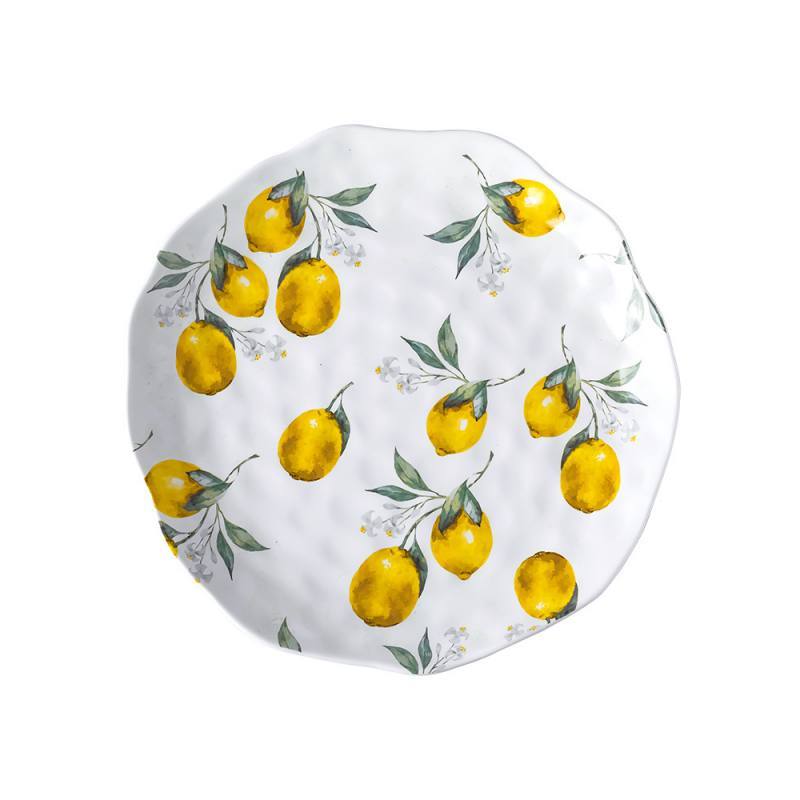
Products in this guide: Lemon Pattern Stoneware Plate · INS Style Red Rim Dessert Plate
What Gets Recovered, and How
Spray booth overspray. In a spray booth, a proportion of the glaze never reaches the piece — it is drawn into the booth's water curtain or filter. A factory can collect it, settle it, and return it to the glaze line after sieving. With dipping rather than spraying, the loss is smaller and recovery is mostly about drips and spills.
Spills, drips and cleaning residue. Glaze that runs off during dipping, and the glaze removed when equipment is cleaned, can be returned to a holding tank rather than washed away.
The critical control is what happens before reuse. A recovered glaze is not the same material as a fresh one: the particle-size distribution has changed (fines settle differently, coarse particles were screened out), and it may carry contamination. So the disciplined version of the practice is: settle, sieve, measure specific gravity and flow time, and blend into the line at a defined proportion, with the blend measured before use. The undisciplined version is a drum of "recovered" glaze tipped in when the level drops — which is how a colour shifts or a surface becomes specked, and how a defect appears with no traceable cause.
The spec freeze guide explains how artwork and packing files are locked between orders.
Wastewater and Sludge
Clay and glaze sludge accumulates in settling tanks and pits. Properly handled, the water is reused in the process and the settled solids are dewatered and sent for appropriate disposal or reuse. Poorly handled, it is discharged.
What this means for a buyer. Two practical points. First, a factory with a settling system and a permit is a factory that will still be operating in five years; one discharging into a ditch is a supply risk. Second, buyers in regulated markets increasingly have to answer a supplier questionnaire that asks about environmental compliance, permits and wastewater — and the honest answer requires the factory's documents.
The Three Questions Worth Asking
Do you recover glaze, and at what proportion? A proportion and a measurement method is a controlled answer; "we reuse what we can" is not.
How is a recovered glaze verified before use? The answer should name gravity, flow time, sieving, or all three.
Does the site hold an environmental permit, and can you provide a statement for our supplier questionnaire? A simple yes with a document, or a clear no, both useful — and the question itself signals that the buyer is serious.
The Cost and Quality Trade-Off
Recovery reduces material cost and waste, and it carries a quality risk that is entirely manageable. Two positions are legitimate, and both should be stated rather than assumed.
Standard practice: recovered glaze is used, blended at a controlled proportion and verified. Cost is lower, and the product is consistent because the control exists.
First-use glaze where the buyer requires it — for a sensitive colourway, a critical surface, or a market with strict claims about recycled content. It costs more, and a supplier that offers this option is being responsive rather than difficult.
What to Write Into the Order
Two lines.
- A disclosure requirement: whether recovered glaze is used for this item, and if so at what proportion and with what verification.
- The buyer's position on recovered content, where it matters — either permitted, with the blend controlled, or excluded for this item.
The packaging guide explains how retail-ready and protective layers are specified together.
The Habit That Ties It Together
The habit is to ask about the drum before asking about the discount. Programs that do this understand where a price comes from — and stop discovering that a cheaper glaze was cheaper because half of it was somebody's overspray.
Related Products
Explore products featured in this guide:


Have questions? See our Sizes & Finishes FAQ and Ordering & Certifications FAQ.
Need a custom quote? Send an inquiry or browse our full product catalog.