Gold and Overglaze Decoration: Why It Fades, and How to Specify It Honestly
- Share
- Issue Time
- Sep 21,2026
Summary
Gold rims, lustres and most decals sit on top of the glaze rather than under it, which decides how long they last. This is what the third firing does, where the durability actually comes from, and the questions that stop a beautiful decoration from becoming a complaint.
The Problem: The Prettiest Decoration Is the Most Fragile
A gilded rim and a printed logo can look equally good in a photograph, and they behave completely differently in use. The difference comes from one fact: an underglaze or in-glaze decoration is fired into the glaze, while gold, lustre and most decals are applied on top of the finished glaze and fired a third time at a lower temperature. The decoration sits on the surface, so it is the surface that wears away.
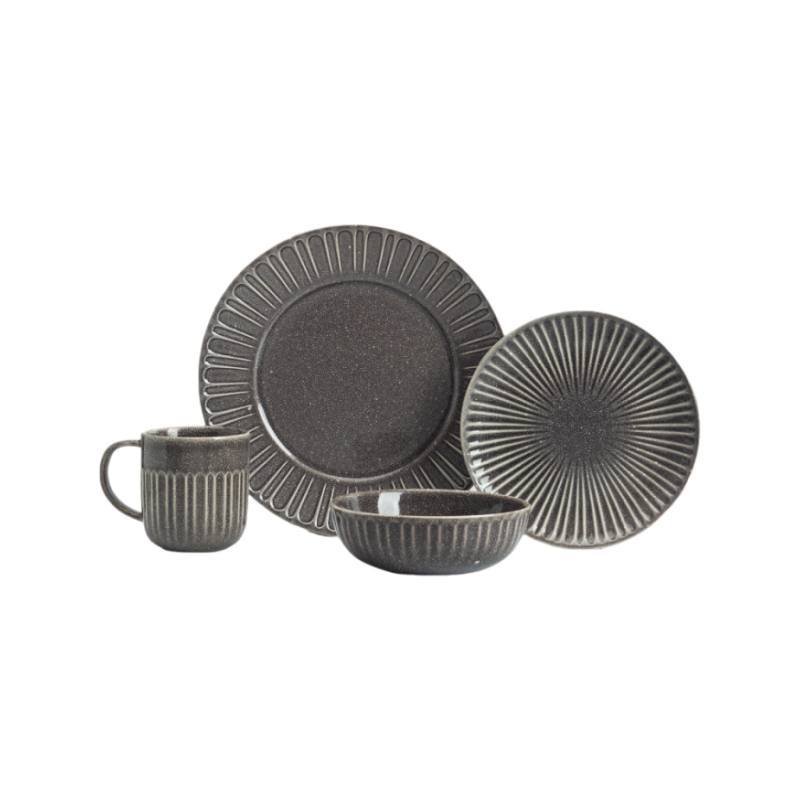
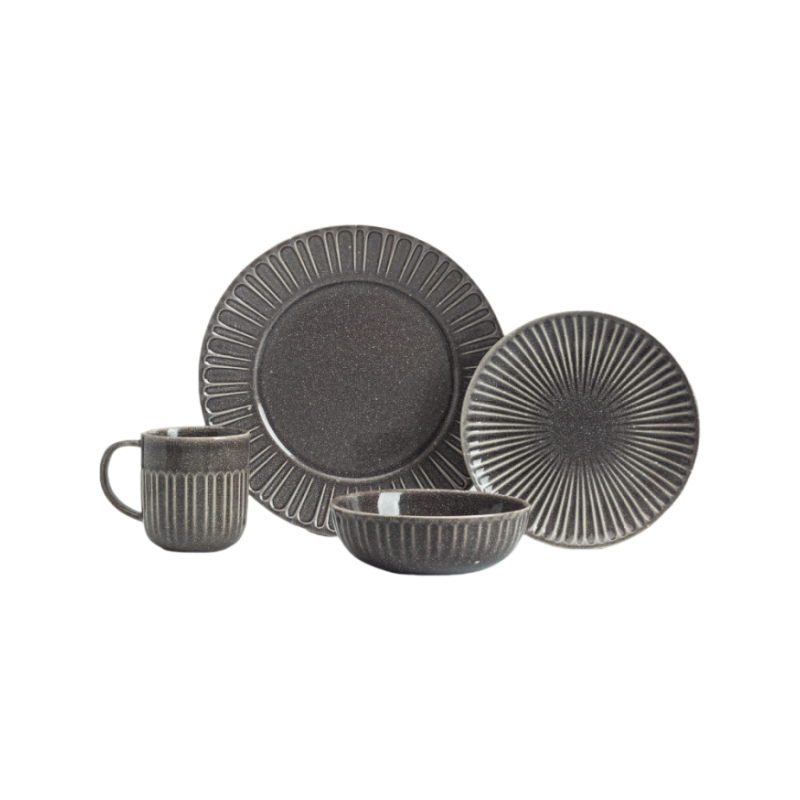
Products in this guide: Grey Reactive Glaze Stoneware 4-Piece Dinnerware Set · Japanese Ceramic Dinnerware Plate – Black Stoneware Dinner Set Style
That is not a defect; it is a category. The mistake is specifying a decoration without deciding what it has to survive — and then discovering the answer in a customer review.
What the Third Firing Does
After the glost firing, decoration is applied and the piece is fired again at a lower temperature. Three consequences follow.
Adhesion rather than fusion. The decoration bonds to the glaze surface rather than becoming part of it, which is why it can be removed by abrasion, by a dishwasher's detergent and heat, and by mechanical scraping.
Metallic decoration is not a glaze. Gold and platinum preparations contain metal; they are decorative finishes on a ceramic, not a food-contact surface in the way a glaze is. Where the decoration sits on a lip or rim, that distinction becomes a compliance question rather than an aesthetic one, and different markets treat it differently. The practical answer is to keep metallic decoration off the drinking rim and off any surface that contacts food, whether or not a particular market allows it.
Detergent and heat are the real tests. A dishwasher combines hot water, alkaline detergent and mechanical action. Metallic decoration that survives hand washing for years can dull in a few dozen dishwasher cycles — and a decal can chalk or lift at the edges.
Where Durability Actually Comes From
Four factors, and a buyer can ask about all of them.
Decoration type. Under the glaze, durability is close to the glaze's own; on top, it depends on the bond. Where the print must survive commercial dishwashing, the decoration should be chosen accordingly rather than upgraded after the complaint.
Firing temperature and cycle within the decoration firing. Higher within the allowed range generally gives a better bond; under-firing gives a decoration that rubs off with a finger.
Application quality. Dust, grease or a fingerprint under the decal produces a lifted edge; a decal applied with air trapped underneath blisters in the firing.
The part of the piece. Rims and handles are touched and struck; a decoration in the middle of a body has an easier life than the same decoration on a rim.
What to Specify
Five lines, and they take five minutes to write.
- The decoration method by name — underglaze print, in-glaze, decal, gold or lustre — with the method chosen for the durability requirement rather than for the sample photograph.
- The intended washing regime: hand wash, domestic dishwasher, or commercial dishwasher. This single sentence decides which methods are even candidates.
- The metallic rule: metallic decoration not on the drinking rim or on food-contact surfaces.
- A durability test with a result: a stated number of dishwasher cycles on a sample, with the appearance checked against a retained standard, recorded per batch or per decoration batch.
- A retained decorated standard — the same master-sample discipline used elsewhere, but for the decoration rather than the glaze.
The spec freeze guide explains how artwork and packing files are locked between orders.
What to Ask a Supplier
Six questions, in the order that gets to the answer fastest.
- Is this decoration under the glaze or on top of it, and is there a third firing?
- If it is on top, what is the firing temperature, and how is it controlled?
- What dishwasher performance do you claim, and how was it measured?
- Where a metal decoration is involved, does it touch the rim or any food-contact surface?
- What do you see in practice after a hundred dishwasher cycles — dulling, edge lifting, or no change?
- If we need the print to survive commercial dishwashing, which method would you use instead?
The Commercial Position
Three practical statements, because decoration is where expectations and physics most often diverge.
A metallic finish is a premium decoration with a service life. Selling it as permanent is what produces complaints; stating what it survives is what produces satisfaction.
A cheaper decoration is often a better product. An underglaze print costs less than gilding and survives more — for a logo mug used daily in a café, the durable option is also the sensible one.
Decoration durability belongs in the price conversation. A method that survives commercial washing costs more than one that does not; that difference should be visible in the quotation rather than discovered in the returns.
The packaging guide explains how retail-ready and protective layers are specified together.
The Habit That Ties It Together
The habit is to choose the decoration by the life the product will lead. Programs that do this sell gilding that is expected, prints that last, and far fewer conversations about a rim that used to be gold.
Related Products
Explore products featured in this guide:
Have questions? See our Sizes & Finishes FAQ and Ordering & Certifications FAQ.
Need a custom quote? Send an inquiry or browse our full product catalog.