Packaging Materials Compared: Corrugated, Moulded Pulp, Foam and Honeycomb
- Share
- Issue Time
- Sep 22,2026
Summary
Four materials do almost all the work in ceramic packaging, and each fails in a different way. Choosing between them is a decision about protection, cost, freight volume, recyclability and how much tooling you are willing to fund.
The Problem: The Insert Nobody Specified
A ceramic carton has two parts: the box and the insert. The box is usually specified because it is printed and priced; the insert — the folded corrugated cradle, the moulded pulp shell, the foam block — is often left to the factory, which chooses whatever is available. That choice decides the breakage rate, the freight volume, the recyclability of the pack and how the product looks when the customer opens it.
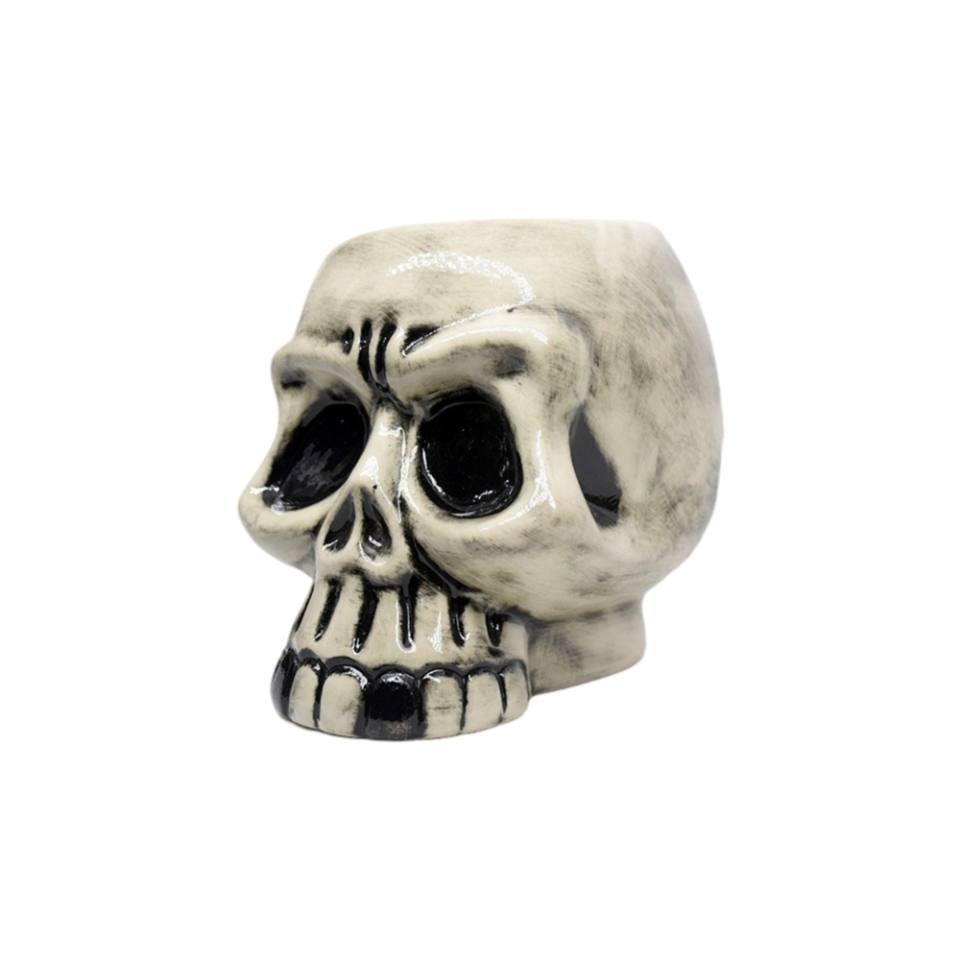
Products in this guide: Ceramic Skull Beer Mug · Bee YOUtiful Ceramic Kids Cup
The Four Materials
Corrugated board inserts. Folded or die-cut cradles and dividers made from the same board as the box. Cheap tooling (a die at most), light, printable, and recyclable in the same stream as the box. The weakness is that it is a structure rather than a cushion: it holds the piece away from the walls but absorbs shock poorly, and it loses strength when damp — the same humidity problem that afflicts the outer carton.
Moulded pulp (paper pulp). A shaped shell formed to the product, made from recycled paper fibre. Excellent conformability for round profiles such as mugs and bowls, good compression behaviour, and genuinely recyclable and compostable in most markets. It requires a tool — a mould per size — with a lead time and a cost, so it suits a product that will repeat.
Foam (EPE, EPP, EPS). The best energy absorption per millimetre, and the easiest to specify: sheets, profiles and shaped blocks. The costs are the material cost, the volume it occupies in the container (foam is bulky, and freight is paid on volume), and recyclability — which is now a market issue rather than a theoretical one, because several markets regulate or penalise plastic packaging.
Honeycomb board. A stiff paper-based panel with a honeycomb core: strong in compression, flat and printable, and recyclable with the rest of the paper. The trade-off is bulk and cost, and it works best where the pack is loaded in compression rather than subjected to a single impact.
Where air pillows and loose fill fail. They are a void filler, not a product holder: for a heavy glazed piece, the item moves inside the void and the impact is transferred to the rim. They are useful for light, non-fragile goods, not for a mug that lands on its lip.
The Comparison That Matters
Seven criteria, and where each material sits.
- Tooling: corrugated low (a die at most) | moulded pulp medium (a mould per size) | foam low | honeycomb low.
- Impact protection: foam excellent | moulded pulp and honeycomb good | corrugated moderate.
- Compression protection: honeycomb excellent | pulp and foam good | corrugated good when dry and poor when damp.
- Freight volume: corrugated and pulp low | honeycomb medium | foam high — and freight is paid on volume.
- Recyclability: corrugated, pulp and honeycomb high (paper stream) | foam low.
- Retail appearance: corrugated good if printed | pulp good and natural | foam and honeycomb fair.
- Best suited to: corrugated for dividers and sets | pulp for round pieces | foam for high-value fragile items | honeycomb for flat stacked goods.
How to Choose, in Four Questions
Is the piece round or flat? Round profiles suit moulded pulp or a die-cut cradle; flat pieces suit honeycomb and edge protection.
Is the rim exposed? If the rim is the failure point — a mug, a bowl, a plate edge — the pack must hold the piece away from the wall without contact on the rim. Corrugated cradles do this at the lowest cost.
What will the parcel or pallet experience? Sea freight and transhipment favour compression strength; parcel and courier networks favour impact absorption. The transit test should decide the choice, not the catalogue.
Which market is the pack sold into? Where extended producer responsibility fees, plastic taxes or retailer packaging requirements apply, a paper-only pack is not just a preference — it changes the cost of the market.
The Specification Lines
Four items, so that the insert is specified rather than assumed.
- The insert material and construction, by name — die-cut corrugated cradle, moulded pulp shell, foam profile — with a diagram or a photograph of the loaded carton.
- The outer carton grade and dimensions that the insert is designed for, since they move together.
- The recyclability statement: whether the pack is single-material paper, or contains plastic, so the buyer can answer a retailer or a compliance question.
- The transit test requirement — a defined drop compression and vibration sequence, with the result recorded (the test itself is worth its own specification).
The packaging guide explains how retail-ready and protective layers are specified together.
What to Ask a Factory
Five questions.
- What insert is in this pack now, and is it specified or chosen from stock?
- What test has this pack been through — drop, compression, vibration?
- If we moved to a paper-only pack for the German or French market, what would change in cost and protection?
- How much of the container does the pack occupy, and can it be reduced without losing protection?
- What is the tooling cost and lead time if we wanted a moulded pulp insert for this size?
The Habit That Ties It Together
The habit is to specify the insert as a component, test it, and choose it by market rather than by availability. Programs that do this pay for protection once — and stop paying for it twice, in freight volume and in breakage.
Related Products
Explore products featured in this guide:


Have questions? See our Sizes & Finishes FAQ and Ordering & Certifications FAQ.
Need a custom quote? Send an inquiry or browse our full product catalog.