Pet-Friendly Venues and Pet Bowls: A Second Service Line to Specify
- Share
- Issue Time
- Sep 27,2026
Summary
Cafés and hotels that welcome dogs now serve two customers at the same table. The pet bowl is a product with its own specifications — and the venue's hygiene rules decide where it can be used and how it must be washed.
The Problem: Two Customers, One Table
Pet-friendly cafés, hotels and pubs have created a second service line: the dog on the floor is a customer too, and a ceramic bowl is how the venue serves it. That introduces a product with its own specification and a set of hygiene questions the human tableware does not raise — where the bowl is filled, where it is washed, and how the venue proves it does not cross-contaminate.
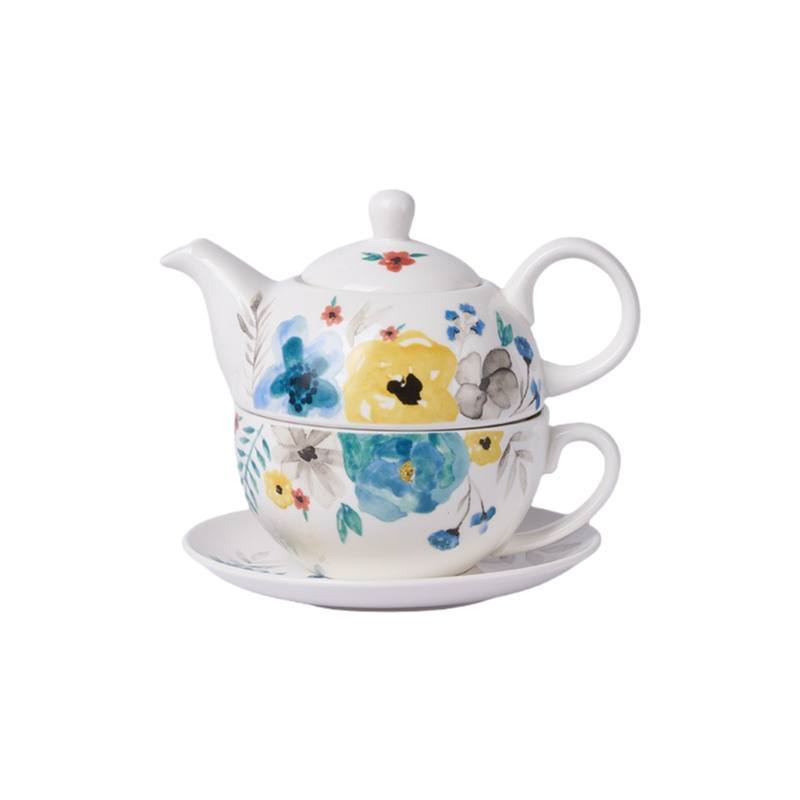
Products in this guide: Creative Porcelain Tea Set · Japanese Style Stoneware Teapot With Infuser Lid
Four Specifications for the Bowl
Stability. A bowl pushed by a dog slides, tips and spills. The two design answers are mass low in the body (a heavier base rather than a heavier wall) and a foot with a grip ring or a ribbed base. Both are mould-stage decisions, and a bowl that slides across a tiled floor will not be used a second time.
Capacity and depth against the breed mix. A venue serving small dogs and large dogs needs two sizes at most, and the useful specification is capacity plus depth: a deep narrow bowl is harder to drink from than a wide shallow one, and a bowl that is too deep for a small dog simply does not get used.
No small parts, nothing to chew off. Decorations with applied elements or loose rings are a hazard in a setting where the product is used by animals. The specification should require fired decoration only, no applied parts, and a rim free of sharp edges — which is also the chip-resistance requirement, since bowls are collected in stacks.
Washability, and where it happens. Whether the pet bowl may go through the same machine as human ware is a venue policy question, and it decides the specification: where bowls must be washed separately, the venue needs a distinct colour or shape so the separation is visible to staff; where they are washed together, the thermal-cycle requirement is the same as for any bowl. Either way the answer should be written down rather than assumed.
Hygiene as a Story the Venue Tells
Pet-friendly service works as a guest experience only if the venue can describe its hygiene routine plainly: separate bowls, stored apart, washed on a defined cycle. That is a design and documentation question, and a supplier can help by offering bowls in a body colour reserved for pet service and by setting out the wash guidance in the product documentation. For a hotel group, the same logic as floor-wide service applies: a code that staff can follow without reading.
The Retail Angle
Pet bowls sell. A venue that puts its mark on a bowl creates a retail item, and the same rules apply as for any ceramic gift line: fired decoration, a retail-ready pack, and a single-piece reorder path — because a shop that sells one bowl a week needs replenishment, not a pallet.
Questions to Ask a Supplier
- What is the base design, and does the bowl resist sliding on a tiled floor?
- What are the volume and depth for a small-dog and a large-dog size?
- Is all decoration fired, with no applied or loose parts?
- What is the rim profile, and how does the bowl stack for collection?
- Can a reserved body colour be produced to make pet service visible?
- What dishwasher cycle count is the bowl tested to, and what retail packaging is available?
The spec freeze guide explains how artwork and packing files are locked between orders.
What to Put in the Order
- Base design and grip, tested on a hard floor.
- Two sizes with stated volume and depth.
- Fired decoration only, with no applied parts.
- A reserved colour for pet service separation.
- Thermal-cycle and dishwasher figures.
- Retail packaging and single-piece reorder terms, where the venue retails.
The packaging guide explains how retail-ready and protective layers are specified together.
The Habit That Ties It Together
The habit is to treat the pet bowl as a product with its own specification rather than as a novelty. Venues that do this keep the service in use, keep the hygiene story simple, and occasionally sell one off the shelf.
Related Products
Explore products featured in this guide:


Have questions? See our Sizes & Finishes FAQ and Ordering & Certifications FAQ.
Need a custom quote? Send an inquiry or browse our full product catalog.