Pop-Ups, Market Stalls and Mobile Food: Tableware That Folds Into a Van
- Share
- Issue Time
- Sep 27,2026
Summary
A pop-up or market trader sets up and strikes in the same day, often without running water and always without storage. The tableware has to survive that twice a week — and it also has to look like a brand, not like borrowed equipment.
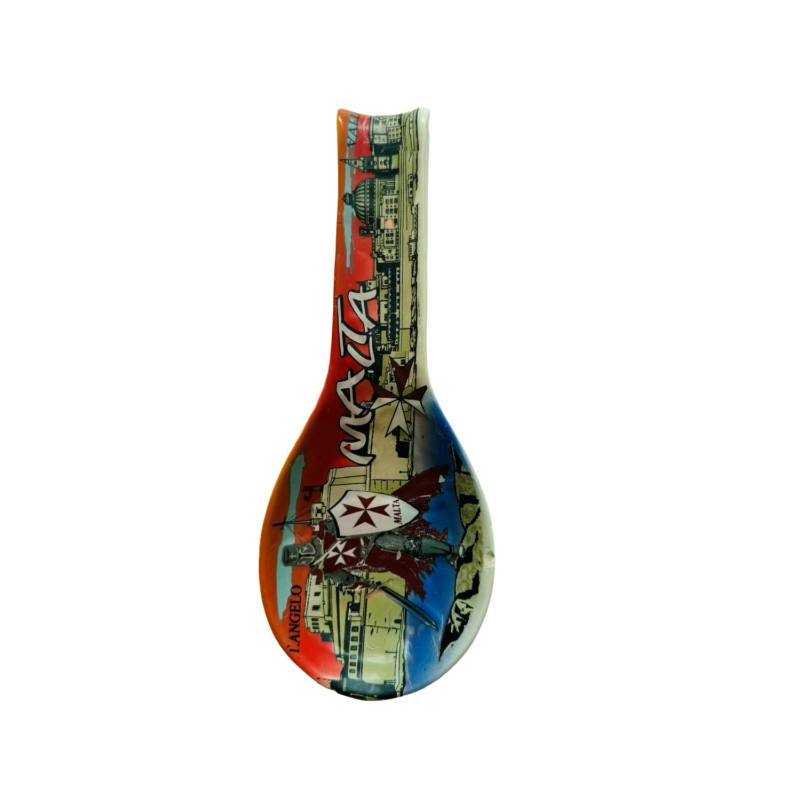
The Problem: A Restaurant That Folds Into a Van
A pop-up, market stall or mobile trader is a small food business with no fixed kitchen, no storage and — often — no water supply. The tableware is loaded, used, washed somewhere else (or not at all) and loaded again, twice a week or twice a day. Three constraints follow, and each one points away from restaurant-grade assumptions.
Products in this guide: Artistic Ceramic Spoon · White Ceramic Spoon
Three Constraints
Portability and stacking per crate. The unit is again the crate, but smaller: everything has to fit a van and be carried by one or two people. Crate dimensions, packed weight and nesting height belong in the brief — a set that stacks to 30 cm is a different business from one that stacks to 60 cm, because the trader has to lift it, not a hotel porter.
Damage on the move, on surfaces that vary. A market floor can be gravel, paving, grass or a hall floor, and unloading is fast. The relevant test is a drop onto a hard, uneven surface, and the piece that passes is a stouter, slightly heavier body rather than the lightest option. Handle and rim must also survive being grabbed by a customer standing up.
Washing that may not exist. Some sites have a wash-up point; many do not. Where there is none, the trader runs either compostable single-use or a reusable deposit system, and which one is often decided by the event organiser's policy rather than by the trader. Both routes change the specification: a reusable programme needs marking and counting; a compostable route needs to be documented for the organiser.
Branding Is the Product Here
For a pop-up, presentation is the marketing. A customer photographs a stall's plate as often as its sign, which makes fired decoration the right choice and surface print the wrong one — an event weekend is a compressed high-wear window, and a print that fades in week three cannot be reordered in week four. The practical brief: a small range (two or three shapes), one glaze family, an applied logo, and a single-piece reorder path short enough to cover a season.
The Numbers That Decide the Programme
Three figures should be quoted, and they are the same three as any event channel: the breakage rate per event, the loss rate (pieces leave with customers), and the single-piece replacement price. A mobile trader who knows those three numbers can decide whether the reusable route pays against compostable — a decision that is otherwise made on emotional grounds.
Questions to Ask a Supplier
- What crate size do these pieces fit, and what is the packed weight?
- What drop test has the piece passed on a hard, uneven surface?
- Can pieces be marked and counted for a reusable or deposit programme?
- Is the decoration fired, and how does it wear across a weekend of continuous use?
- What is the smallest sensible range for a mobile operation — two or three shapes?
- What is the single-piece replacement price, and how fast can a crate be replenished mid-season?
The spec freeze guide explains how artwork and packing files are locked between orders.
What to Put in the Order
- Crate dimensions and packed weight, for one-person handling.
- A drop test on a hard, uneven surface.
- Marking and counting for a reusable route.
- A short range with one glaze family, for brand consistency.
- Fired decoration with the trader's mark applied.
- Single-piece replacement pricing, with a season-length lead time.
The packaging guide explains how retail-ready and protective layers are specified together.
The Habit That Ties It Together
The habit is to buy the crate and the van rather than the table. Traders who do this reload faster, break less, and stop replacing their whole set before the season ends.
Related Products
Explore products featured in this guide:


Have questions? See our Sizes & Finishes FAQ and Ordering & Certifications FAQ.
Need a custom quote? Send an inquiry or browse our full product catalog.