Product Liability Insurance for Ceramic Imports: The Risk That Is Not the Voyage
- Share
- Issue Time
- Sep 11,2026
Summary
Cargo insurance covers goods in transit. Product liability covers what happens when a customer is injured or a market regulator intervenes — a different exposure, priced differently, and often overlooked until a claim exists.
The Problem: The Policy Everyone Buys Covers the Wrong Risk
Importers of ceramic tableware routinely arrange cargo insurance, negotiate the Incoterm carefully, and consider the risk file closed. It is not. Cargo insurance responds to loss of or damage to the goods while they are in transit — the voyage, the handling, the container. What it does not respond to is the claim that arrives eighteen months later from a customer who says a mug chipped in a way that caused an injury, or from a market authority that questions the safety of a decorated surface. That is product liability, and it answers a different question: not what happened to the goods, but what the goods did. The distinction matters because the two exposures are priced on entirely different logic, and because product liability is where an import programme can meet a cost that dwarfs the value of the order that caused it.
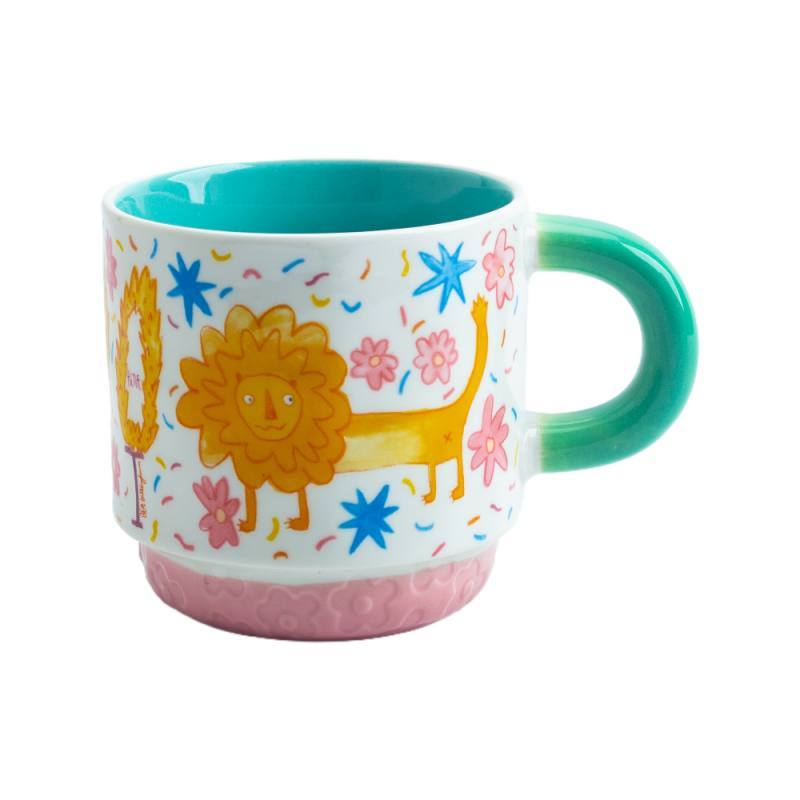
Products in this guide: Kids Printed Ceramic Mug · 6oz Ceramic Kids Cup with Heat Transfer Coating
Where This Fits in the Sourcing Chain
Product liability sits downstream of everything that determines whether a product is safe and correctly described: the acceptance standard applied at production, The AQL baseline guide explains how acceptance levels are set and written down. the accuracy of the label and the care guidance shipped with the product, The carton marking guide explains how marks and labels keep containers moving. and the record that allows a specific batch to be identified if a question is raised. The batch traceability guide explains how a piece is traced back to its production run. Where a defect claim follows a delivery, the warranty clause is the first stop and liability cover is the second. The warranty guide explains how liability and remedy are written into the order. The full chain follows the standard sourcing map. See the full ceramic sourcing process map.
What Product Liability Cover Actually Addresses
Four heads of loss appear in a typical policy, and their boundaries explain the pricing.
Third-party injury or damage. A customer is harmed by the product, or the product damages their property, and the claim is brought against the party that placed it on the market.
Legal defence costs. Even a claim that is ultimately defeated costs money to answer, and defence is often the larger part of the bill.
Recall or withdrawal costs. Some policies extend to the cost of retrieving goods from the market; many do not, and the extension is usually priced separately.
The relationship to warranty. Warranty covers the buyer's commercial remedy against the supplier for defective goods. Liability covers the third party's claim against the party that sold. They meet at the point where a defect leaves the warehouse, and they should be arranged together rather than one at a time.
Why Tableware Carries Real Exposure
Three characteristics put ceramic tableware in a category that insurers look at closely. It touches food and drink, which is the most heavily regulated interface between product and consumer. It can fail in ways that cause injury — chipping and crazing create sharp edges, and hot liquid in a cracked vessel is a foreseeable harm. It is frequently used by or for children, which raises the standard against which the product is judged. None of these are reasons to avoid the category; they are reasons to arrive at the insurer with evidence rather than assurances.
What Determines the Cover You Can Get
Insurers price and condition cover on evidence they can examine, which is why the sourcing file is also an insurance file. The elements that move the position are: test reports for food-contact safety from a recognised laboratory, current for the materials and decoration used; the quality of labelling and instructions, because a claim often turns on whether the product warned correctly about microwave, dishwasher or oven use; traceability, since the ability to identify a batch converts a market-wide problem into a contained one; The batch traceability guide explains how a piece is traced back to its production run. and claims history, which is why the first claim is also a pricing event for the following year. Buyers who can produce those four items on request are not charged less by accident.
How Buyers Strengthen Their Position
Four practical steps, none of which requires a new supplier relationship. Get the testing in writing and keep it current with the decoration actually used. Write the care guidance deliberately — honest claims about dishwasher, microwave and thermal limits remove a class of foreseeable misuse. The carton marking guide explains how marks and labels keep containers moving. Allocate responsibility contractually, since indemnity and insurance obligations should be named in the purchase terms rather than assumed. The force majeure and delay liability guide explains how risk is allocated in the contract. Keep the file, because the policy responds to an incident that is documented, and defends against one that is not.
The Habit That Ties It Together
The habit is to treat liability as part of the sourcing file rather than an administrative purchase: testing current, labelling deliberate, traceability real, responsibility named in the contract. Programs that do this negotiate cover from a position of evidence. Programs that do not discover that the most expensive part of a liability claim is not the settlement — it is being unable to show that the product was made and described properly in the first place.
Related Products
Explore products featured in this guide:


Have questions? See our Sizes & Finishes FAQ and Ordering & Certifications FAQ.
Need a custom quote? Send an inquiry or browse our full product catalog.