Shelf Space: How Planogram Decisions Decide Whether Your Mug Sells
- Share
- Issue Time
- Sep 15,2026
Summary
A retail buyer does not decide whether a product is good; they decide whether it earns its space. Understanding what a planogram measures is the difference between a listing that renews and one that disappears at the next review.
The Problem: The Decision Is About Space, Not Quality
A supplier who has never seen a planogram tends to assume a retail buyer is choosing the best product. In practice the buyer is allocating a fixed quantity of shelf — measured in centimetres and in facings — and asking which items will earn the most per centimetre. That reframes everything: a good product in packaging that wastes shelf depth loses to a lesser product that fits the fixture properly. Understanding the arithmetic changes the product, the pack and the pitch.
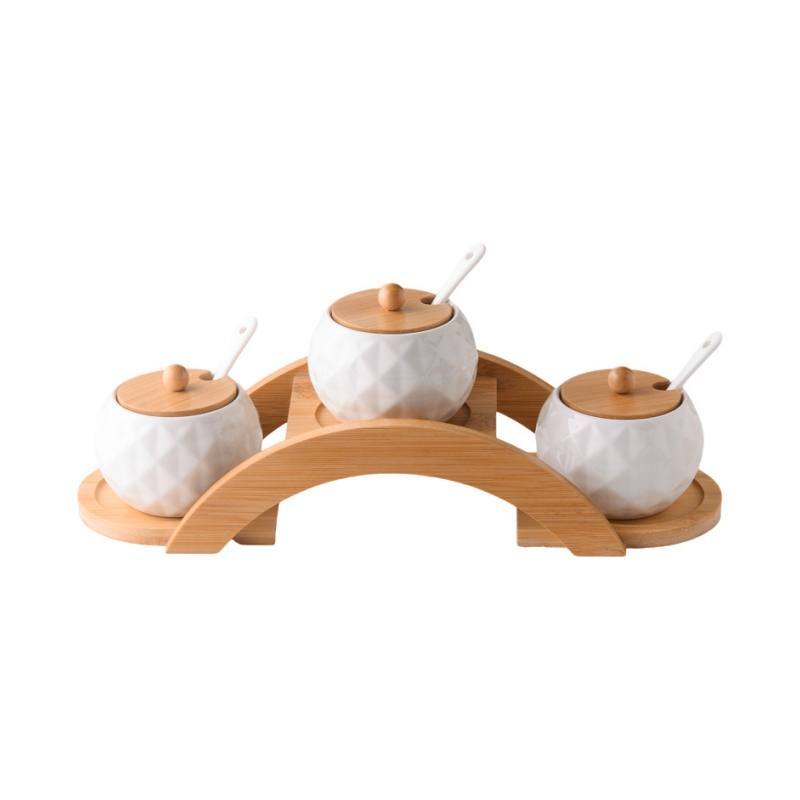
Products in this guide: Nordic Ceramic Spice Jar Set With Bamboo Lids · Creative Porcelain Tea Set
Where This Fits in the Sourcing Chain
Shelf performance is decided at the packaging and specification stage, long before the buyer sees anything. The packaging guide explains how retail-ready and protective layers are specified together. Because the assortment renews on a cycle, a product that sells steadily is defended by evidence rather than by novelty. The spec freeze guide explains how artwork and packing files are locked between orders. The full chain follows the standard sourcing map. See the full ceramic sourcing process map.
What the Planogram Actually Measures
Facings. How many units sit side by side at the front of the shelf. A product that is 10 cm wide gets more facings in the same space than one that is 14 cm, which matters more than most suppliers expect.
Shelf height and depth. Mugs are usually merchandised standing for visual appeal but travel best lying down; a box designed for one orientation may not fit the other, and a box that is 2 cm too deep can reduce the number of rows a shelf holds.
Sales per linear metre. The metric that decides renewal. It is calculated from units sold against the shelf length the range occupies — which is why a slow-selling large item is removed faster than a fast-selling small one.
Fixture type. Shelving, pegboard hooks, counter units and display pallets impose completely different pack requirements: a hook needs a hang-tab, a pallet needs a display carton, a shelf needs stackability and a barcode facing outward.
What This Means for the Product and the Pack
Four design consequences follow. Keep the carton footprint disciplined: a compact box that stacks squarely holds more units per shelf and per pallet. Put the barcode where it can be scanned without unpacking, and on the face the store will display. Design the carton to double as a display where the channel uses display pallets, so the store can merchandise it without work. Support two orientations — standing for display, lying for storage — because stores do both at different times of the season.
The Assortment Logic Buyers Use
A practical shelf is built as one hero, two supports and a price entry: a strong visual seller in the middle of the price range, two complementary designs that broaden the range without duplicating it, and one low-price item to catch the impulse buyer. Suppliers who present exactly that structure — rather than eight variants of the same mug — make the buyer's decision easy, which is a substantive commercial advantage.
How to Pitch It
Four arguments, in the buyer's own language: the pack fits your fixture (with dimensions); units per shelf and per carton (the space arithmetic); a demonstrated sell-through (which the buyer values above design); and a repeatable specification so a reorder is not a new project. Where a supplier can bring a suggested planogram — a diagram showing how the range would sit on a standard fixture — the conversation changes from "do I like it" to "does it fit".
The Habit That Ties It Together
The habit is to design the pack for the shelf rather than for the product. Programs that do this get renewed because they earn their centimetres. Programs that do not bring a beautiful mug in a box that wastes space and lose to a plainer product that fits.
Related Products
Explore products featured in this guide:


Have questions? See our Sizes & Finishes FAQ and Ordering & Certifications FAQ.
Need a custom quote? Send an inquiry or browse our full product catalog.