Single or Double Firing: The Choice That Sets Your Reject Rate and Your Decoration Options
- Share
- Issue Time
- Sep 21,2026
Summary
Whether a piece is fired once or twice before decoration is a process decision with visible consequences — on price, on defect rates, on which decorations are possible and how the body looks.
The Problem: Two Routes to the Same Object, With Different Consequences
A glazed mug can be made two ways. In single firing, the formed piece is glazed and then fired once. In double firing, the piece is fired first without glaze — the biscuit or bisque firing — then glazed and fired again, the glost firing. Both routes produce a mug that looks the same on a shelf, and they differ in ways that reach the buyer: the price, the reject pattern, the decoration options, how much colour variation appears within a shipment, and how easily a defect can be caught before it becomes expensive.
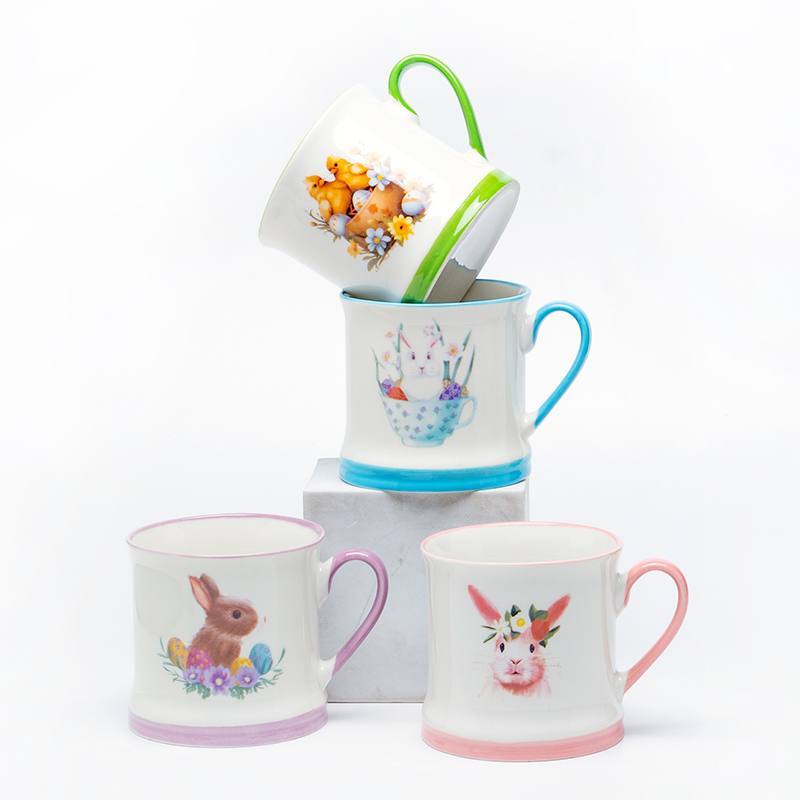
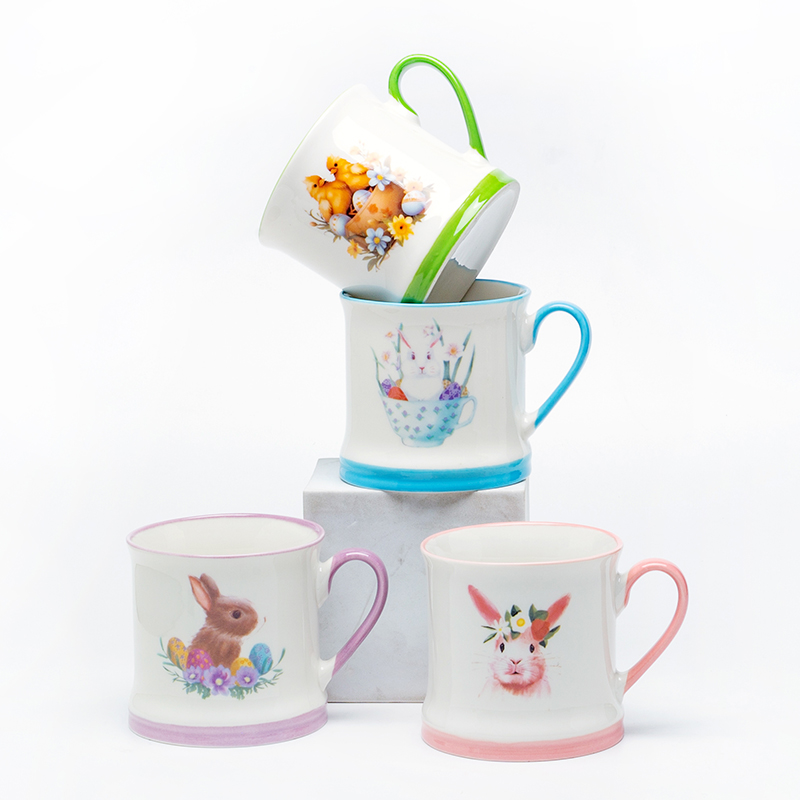
Products in this guide: Ceramic Decal Printed Rabbit Animal Ceramic Coffee Mugs - Cute Bunny Pattern · Ceramic Decal Printed Mother's Day Ceramic Coffee Mugs - Parent & Child Warm Red Pattern
Most buyers never ask which route is used. It is one of the few process questions where the answer directly explains several things a buyer may be experiencing without knowing the cause.
Why Biscuit Firing Exists
Four real advantages, and they are all about risk placement rather than quality for its own sake.
Defects are caught when they are cheap. A piece that breaks or distorts in the biscuit firing has consumed one firing and no glaze. The same piece failing in a single firing has consumed the glaze, the decoration preparation and the firing — and any pieces it damaged in the kiln.
The ware is easier to handle and finish. Biscuit is stronger and drier than greenware, so trimming, sanding and inspection are more reliable, and handling losses fall.
Glazing becomes more controllable. A biscuit body absorbs water predictably, which makes glaze pickup consistent. Glazing greenware requires more control of moisture and is less forgiving — a reason single-firing factories live or die by their slurry discipline.
Decoration options open up. Underglaze decoration and some in-glaze effects sit better on a biscuit, and a third firing for overglaze decoration or a decal is possible on top of a glost body without risk to the body itself.
What Single Firing Buys
Energy and time. One firing instead of two is a material saving in fuel, kiln time and handling labour, which is why single-firing is common in volume production of straightforward items.
A shorter cycle from forming to packed goods, which matters in a peak. And a slightly different body appearance, since a once-fired body can be marginally more translucent or brighter in some formulations, because the body has not been through an extra thermal cycle.
What it costs. Risk is concentrated at the most expensive point: a defect that appears after glazing wastes the glaze and everything else. Reject rates on a poorly controlled single-firing line can be materially higher than on a double-firing line, and the difference is invisible in a quotation — it is simply absorbed into price or lost in quality.
A Third and Fourth Firing
Two further stages are worth knowing about, because they explain both price and decoration durability.
Decoration firing. Overglaze decoration, gold and most decals are applied after glazing and fired a third time at a lower temperature. This is why a gilded rim is not dishwasher-proof in the way an underglaze print is: the decoration sits on the glaze rather than under it, and a lower firing temperature means less durability.
Re-firing and rework. A piece rejected for a minor glaze defect can sometimes be re-fired after re-glazing or touch-up. Where a factory does this, the buyer should know: a re-fired piece can be perfectly good, and it can also be a piece with a subtly different colour or a weaker body. It is worth asking whether rework is used, and under what limits.
How the Choice Reaches the Buyer
Five visible consequences, and each is worth a question.
Price. Two firings cost more in energy and handling. A significantly cheaper quotation on an identical item may be a single-firing line.
Reject pattern. A double-firing factory tends to reject earlier; a single-firing factory tends to reject later, which means more of the sorting happens at the end, and more of the risk is carried in the finished goods.
Decoration durability. A third firing at a lower temperature for gold or a decal produces a decoration that is more decorative than functional. If the buyer needs dishwasher durability, the decoration method should be chosen accordingly — underglaze or in-glaze rather than overglaze.
Colour consistency. Two thermal cycles give the body and glaze a different history than one, and the appearance of a cream or a warm white body differs between routes. Mixing suppliers who use different routes in one programme is a common and avoidable cause of a colour mismatch across a range.
Lead time. Two firings add days, and a third adds more. In a peak, a double-firing programme needs an earlier order date for the same shelf date.
The replenishment calendar maps the ordering windows for the whole year.
What to Ask a Supplier
Five questions, and the answers should be consistent with everything else in the quotation.
- Is this item single-fired or double-fired, and does that change by item in our range?
- If it is double-fired, what is the reject rate at the biscuit stage versus the glost stage?
- Is there a third firing for the decoration we have specified, at what temperature, and what does that mean for dishwasher durability?
- Do you re-fire or rework rejected pieces, and under what limits?
- If we move a second item to a second supplier, will the route be the same — and what does that mean for colour across the range?
The Habit That Ties It Together
The habit is to ask which route the item takes, and to write the answer into the specification. Programs that do this know where their risk sits, can explain a colour variation across a range, and choose decoration methods that survive the way the product is actually used.
Related Products
Explore products featured in this guide:


Have questions? See our Sizes & Finishes FAQ and Ordering & Certifications FAQ.
Need a custom quote? Send an inquiry or browse our full product catalog.