Sourcing Ceramics for Turkey: A Market Inside a Customs Union
- Share
- Issue Time
- Sep 23,2026
Summary
Turkey is often filed under "emerging market" and treated like the Gulf or Latin America. It is not: it sits in a customs union with the EU, it has its own substantial ceramics industry, and its currency moves enough to change the shape of a contract.
The Problem: The Assumption That Fails First
Turkey is commonly approached as a general "emerging market": high growth, price-sensitive, import-friendly. Two of those assumptions hold and the third is more complicated. Turkey is in a customs union with the European Union, which means that for industrial goods in free circulation the customs position is unusual — and that a distributor in Istanbul may care less about import duty and more about standards, price stability and delivery than a buyer in a market outside the union. Add a large domestic ceramics industry and a currency that has been volatile, and the practical picture is unlike either the Gulf or the EU.
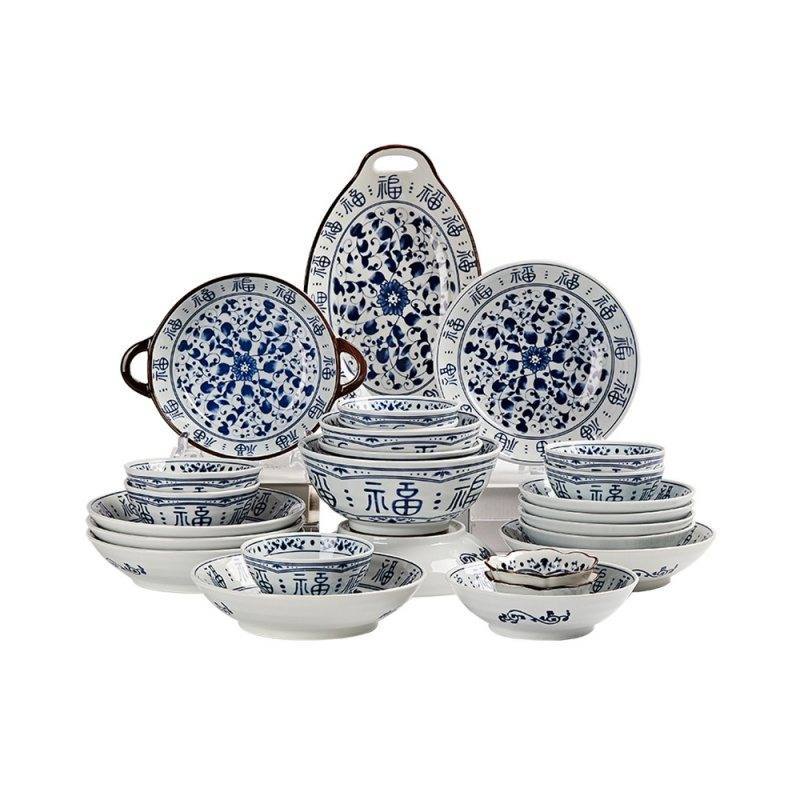
Products in this guide: Traditional Chinese Blue & White Dinnerware Set · Elegant Ceramic Chopsticks With Floral Patterns
Three Things That Shape a Turkish Order
The customs union position. For industrial products, the union removes customs duties on trade between Turkey and the EU subject to rules on origin and free circulation; at the same time, Turkey applies the EU's common external tariff to imports from third countries. The practical consequence for a non-EU supplier: the duty position is usually determined by the tariff structure Turkey applies, not by an assumption drawn from another market, and it can differ by classification. The classification question therefore arrives early in the conversation, exactly as it does in the EU.
A domestic industry with export ambitions. Turkey produces tableware for its own market and exports — including into the EU. As in India, the opportunity for an importer is not the entry-level price but design, a specific decoration capability, a private-label programme, or a hospitality specification where the local offer is thinner.
Currency and price stability. Where the local currency has moved significantly, importers carry two risks: the cost of goods in hard currency, and the retail price they can achieve in local currency. A buyer managing that will ask for price validity periods, may ask for a currency clause, and may prefer larger, less frequent orders to lock cost. Those are contractual topics rather than quality topics, and they belong in the quotation conversation.
Standards and Documentation
Because of the union position, Turkish technical requirements in regulated areas tend to track EU practice. For food-contact ceramics, this means the compliance conversation looks European: performance of glaze and decoration in contact with food, with test reports expected rather than assumed. Documentation discipline is the same as in the EU: invoice description consistent with the classification, packing list consistent with the container, and certificates where a preference or a specific regime is claimed.
Labelling in Turkish is a market requirement for retail goods. As always, the space belongs in the artwork from the start.
Channels That Buy Imported Ceramics
Distributors and wholesalers serving retail and hospitality, who are price-aware and logistics-literate.
Hospitality and foodservice — hotels, restaurant groups, cafés and catering — where the specification logic is European: durability, dishwasher behaviour, and replacement consistency.
Retail chains and private label, where an imported line has to justify itself against local manufacturing on design and packaging rather than on price.
Gift, corporate and promotional channels, which move quickly and are sensitive to seasonal timing.
Questions to Settle Before Quoting
- What classification applies, and what is the Turkish duty position on it?
- What is the price validity, and how is a currency movement handled between quotation and shipment?
- What test reports are expected for food-contact compliance, and by whom?
- What is required on the retail label, and does the artwork have room for it?
- Which channel is the buyer in, and what does that channel require of the pack and the reorder cycle?
The spec freeze guide explains how artwork and packing files are locked between orders.
What to Put in the Order
- Classification and duty position, recorded rather than assumed.
- Price validity and the currency mechanism, stated in the quotation.
- A payment structure that matches the buyer's currency exposure — for example a larger deposit with a shorter balance window, where that reduces both parties' risk.
- The compliance documentation set for food contact and labelling.
The packaging guide explains how retail-ready and protective layers are specified together.
The Habit That Ties It Together
The habit is to treat Turkey as a European-adjacent market rather than a generic emerging one. Programs that do this quote with the right duty assumptions, handle currency explicitly, and avoid the most expensive version of the mistake — a price that is right in dollars and impossible in lira.
Related Products
Explore products featured in this guide:


Have questions? See our Sizes & Finishes FAQ and Ordering & Certifications FAQ.
Need a custom quote? Send an inquiry or browse our full product catalog.