Teapots, Servers and Jugs: The Specifications Nobody Writes Until It Dribbles
- Share
- Issue Time
- Sep 20,2026
Summary
Brewing and pouring vessels fail in ways that are invisible on a specification sheet: a spout that drips, a lid that falls out, a handle that gets hot. These are the tests and the fields that catch each one.
The Problem: A Shape That Looks Right and Pours Badly
Pouring vessels are the most spec-sensitive products in the drinkware category and the least specified. A mug either holds liquid or does not; a teapot has to pour cleanly, stop cleanly, keep its lid in place while tilted, present a handle that stays comfortable with hot contents, and survive being filled with boiling water. None of those five properties appears on a standard specification sheet, and all five generate returns when they are wrong. The failures are also predictable, which means they are testable — and the tests are simple enough to run in a sample room.
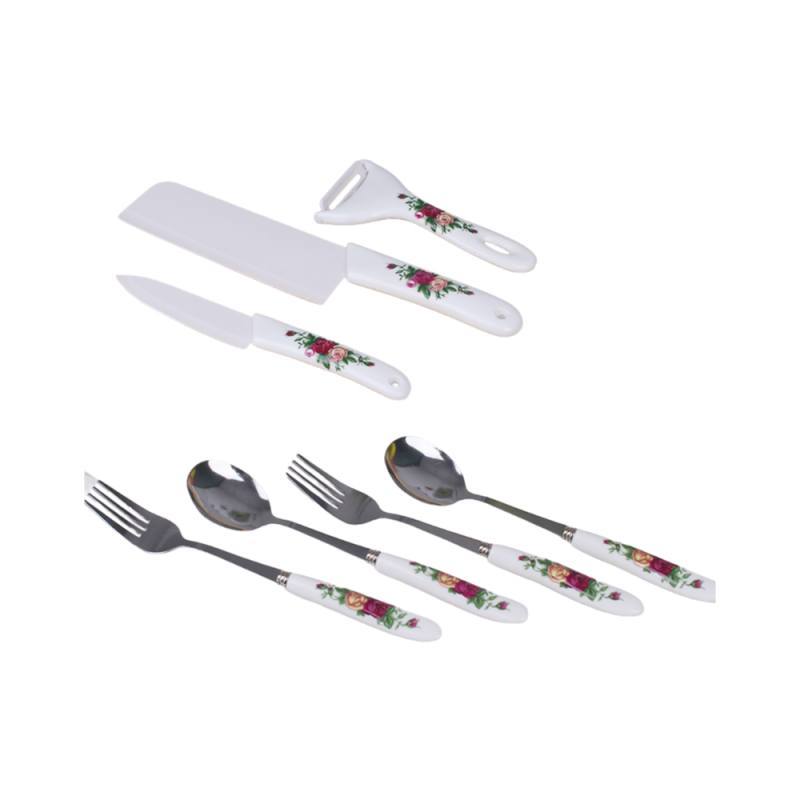
Products in this guide: 7-Piece Ceramic Knife Set · Elegant Newlywed Ceramic Dinnerware Set
Pouring vessels are a specification-heavy product: their function lives in geometry and fit rather than in appearance. The spec freeze guide explains how artwork and packing files are locked between orders. Where the pack protects a spout, it is part of the product too. The packaging guide explains how retail-ready and protective layers are specified together. The full chain follows the standard sourcing map. See the full ceramic sourcing process map.
The Five Functional Properties
1. Pour quality. The single most common complaint. A good pour exits the spout as a coherent stream, breaks cleanly when the vessel is returned upright, and does not run back down the spout or over the rim. The variables that decide it are: the spout's internal profile (a smooth, slightly tapered channel with no lip or step), the angle of the spout relative to the body, the height of the spout tip relative to the rim, and the thickness of the spout lip — a thin, sharp lip is what makes liquid release cleanly rather than cling.
2. Lid fit and retention. A lid has two jobs: sit without rattling, and stay in place while the vessel is tilted. Retention comes from the lid seat geometry and from whether the lid is held by gravity, by a lip, or by a shaped seat. Where a lid is loose, the market will find out on the first tilt.
3. Handle strength and heat. Two separate issues that are often confused. Strength is the ability to bear a full vessel without deformation or joint failure, including when the load is applied suddenly. Heat is the handle's temperature after the vessel has been filled with boiling water and left for a few minutes — a function of handle thickness, material mass, and the distance between the handle and the body. A thin handle close to the wall is a design decision that produces a hot handle.
4. Capacity versus fill level. Vessels are usually sold by capacity, and the honest figure is the practical fill — the volume that can be poured without spilling during a normal tilt — rather than the volume to the brim. The two are commonly 10 to 20 per cent apart, and stating the brim figure is the fastest way to produce a disappointed customer.
5. Thermal behaviour. A teapot receives boiling water repeatedly. Two specifications follow: the body's ability to accept a hot fill without crazing (a firing and glaze question), and the vessel's ability to be handled safely — on the body as well as the handle — immediately after filling.
The Tests, All of Which Fit in a Sample Room
The pour test. Fill to the practical fill line with water, pour into a vessel on a scale or into a measuring jug, and repeat ten times. Record: does the stream break cleanly; does liquid dribble down the spout after the pour; does the last of the pour land in the target or on the table. Ten pours, performed by two people, produce a verdict that a photograph of the product cannot.
The lid retention test. Fill, tilt to the maximum angle at which pouring occurs, and observe whether the lid lifts or shifts. Repeat with the vessel held in one hand, because that is how it is used.
The handle load test. Suspend a filled vessel from the handle, or apply a defined load in the direction of use, and inspect the joint for movement or cracking. Repeat with the load applied suddenly, since a jerk is what breaks a weak joint.
The handle temperature check. Fill with boiling water, wait three minutes, and touch the handle and the nearest part of the body. The judgment is qualitative but decisive — and it is worth repeating with the vessel half full, because a lower fill level can change the contact point.
The thermal cycle. A simple sequence: hot fill into a room-temperature vessel, empty, cool, and repeat several times. Look for crazing in the glaze and for a hairline crack at the base or the spout. This is the test that finds the vessels that will fail in a customer's kitchen rather than in a laboratory.
The dishwasher cycle, where claimed. Decoration durability is a separate claim from the vessel's function, and on a brewing vessel the print is often in the washing zone.
The Specification Sheet Fields
A pouring vessel needs more fields than a mug, and these are the ones that map to the failure modes above.
- Body capacity (brim) and practical fill capacity.
- Height, maximum diameter, spout height above the base, foot diameter.
- Spout profile: tip height relative to the rim, internal taper, lip thickness.
- Lid: type (loose, seated, hinged), lid diameter, retention feature, whether it is interchangeable across the range.
- Handle: internal opening dimensions, cross-section, distance from the body, joint type.
- Infuser or filter: whether supplied, its dimensions, its mesh or hole size, and whether it is interchangeable with the pot.
- Thermal notes: hot-fill guidance, dishwasher and microwave status, any metallic decoration and its implications.
- Packing: individual packing, units per carton, and the handling note — pouring vessels generally need their own inner protection rather than loose packing.
What Fails in the Market, and Why
Five recurring failures, each traceable to a specification that was never written. The dribbling spout — usually a blunt or thick lip, or a spout set too low relative to the rim. The lid that falls out — a seat that relies on a perfect fit rather than a retention feature. The handle that cracks at the joint — an applied handle with insufficient joint development, discovered by the load test that was never run. The hot handle — a thin section close to the wall, chosen for appearance. The infuser that does not fit — bought separately by the buyer, to a dimension that was never exchanged with the pot's manufacturer, which is a coordination failure rather than a manufacturing one.
What a Buyer Should Ask
Six questions, all answerable before an order. What is the practical fill capacity, not the brim figure? Has the vessel been pour-tested, and can the result be described? How is the lid retained when tilted? What load was applied to the handle for testing? What is the handle temperature after a three-minute hot fill? And where the infuser is supplied separately, what are its dimensions and its tolerance?
Packing and Ordering Notes
Three practical points. Pouring vessels should travel individually protected, because a spout is the first thing to chip and a chip on a spout is a Class A defect. Packing ratios should not be forced to match a mug carton — the shape dictates the pack, and a carton that fits a mug will not protect a pot. And the sample must be pour-tested before approval, because an approved sample that dribbles is an approved product that returns.
The Habit That Ties It Together
The habit is to test the vessel by using it before approving it. Programs that do this sell brewing and pouring products that customers keep — and avoid the returns that a beautiful shape with a bad spout will always produce.
Related Products
Explore products featured in this guide:


Have questions? See our Sizes & Finishes FAQ and Ordering & Certifications FAQ.
Need a custom quote? Send an inquiry or browse our full product catalog.