The Buying Decision Chain: Selling to Everyone Who Says Yes
- Share
- Issue Time
- Sep 19,2026
Summary
A ceramic order is rarely one person's decision. Design, technical, commercial, finance and approval each hold a different piece of the answer — and a proposal that satisfies only the person who emailed tends to stall.
The Problem: Winning the Enquiry and Losing the Order
An enquiry arrives from a sourcing manager, the reply is good, the samples are sent — and then nothing. Weeks later the answer is that the project went a different way. In most of those cases the proposal satisfied the person who wrote the email and left the other five people in the room unserved: the designer who wanted a different glaze, the quality lead who needed compliance evidence, the finance manager who wanted a landed-cost figure, and the director who simply wanted a date that could be trusted.
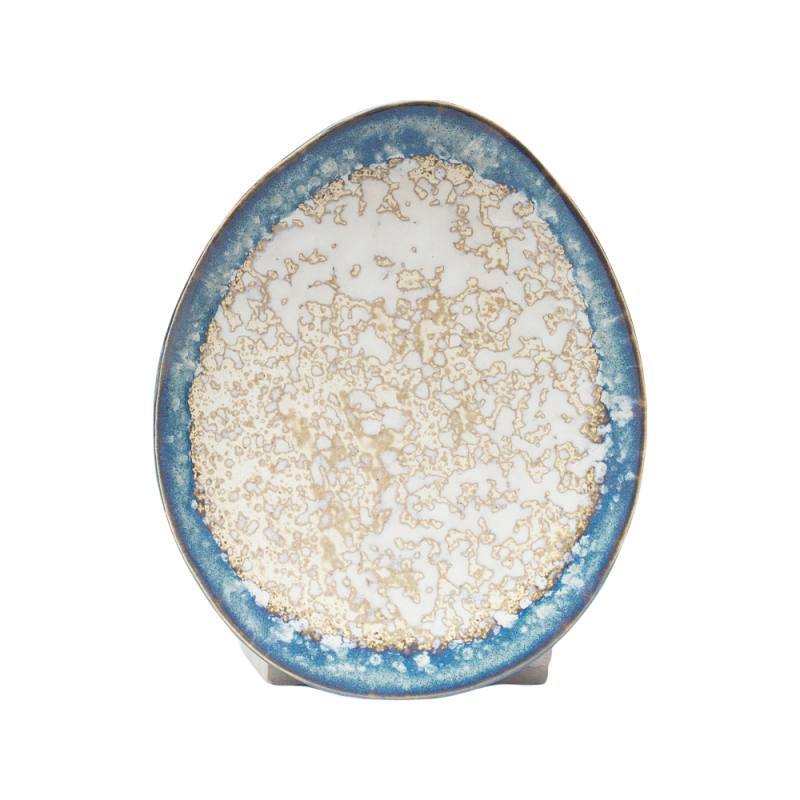
Products in this guide: Ceramic Salad Plates · Handmade Glazed Gourd-Shaped Spice Jar
Where This Fits in the Sourcing Chain
Understanding the decision chain determines which parts of the specification are emphasised, and what evidence accompanies them. The spec freeze guide explains how artwork and packing files are locked between orders. It also determines the packaging conversation, since the buyer's marketing team usually owns the pack. The packaging guide explains how retail-ready and protective layers are specified together. The full chain follows the standard sourcing map. See the full ceramic sourcing process map.
The Five Roles, and What Each One Needs
The user or design owner — often marketing or product development. Wants appearance, the reference match and how the product photographs. Material: samples, usage photography, colour references, and the honest statement about tolerances.
The technical or quality lead. Wants evidence rather than adjectives: food-contact compliance, material data, dishwasher and thermal guidance, and the decoration method. Material: the specification sheet and any test documentation.
The commercial buyer or procurement manager. Wants price, quantity bands, terms and reliability. This is usually the person who emailed, and the one most likely to be satisfied by a default reply.
Finance. Wants total landed cost, payment terms, currency, and the effect on inventory. Material: a cost breakdown at the expected quantity and a note on price validity.
The approver — an owner, a director, a category head. Wants one thing above all: a date that will hold and a risk that is contained. Material: a clear timeline with the milestones and a short statement of what happens if something slips.
The Practical Consequence
Five materials, one enquiry. In practice they can be assembled once and reused: the specification sheet serves technical; the photographs and samples serve design; the price table serves commercial; the landed-cost summary serves finance; the timeline serves the approver. A supplier who sends all five in one structured reply is not sending more work — they are removing the internal forwarding that otherwise costs their buyer a fortnight.
Where the Decision Actually Stalls
Three failure patterns, all visible from outside. The approver was never included, so the recommendation arrives without a case attached. Technical evidence was missing, so the quality function raises a query late in the process. And the timeline was optimistic, so the first slip discredits the whole proposal. None of these are price problems, and none of them are solved by a discount.
One caution worth stating plainly: mapping the chain is about giving each role what it needs to make a decision, not about finding a way around the buyer's own process. A supplier who tries to short-circuit an approval damages the person who invited them in — which is the fastest way to lose an account that was nearly won.
How to Learn the Structure
Three questions, asked naturally in the first exchange rather than as an interrogation. Which team will use the product day to day? — reveals the user. Who signs off the specification? — reveals technical and approval. What does your timeline look like internally? — reveals finance and the approver, and usually prompts the buyer to describe their whole process unprompted.
The Habit That Ties It Together
The habit is to treat every enquiry as a committee, even when it arrives from one person. Programs that do this get answers without chasing, because everyone who needed a reason to say yes already had one.
Related Products
Explore products featured in this guide:



Have questions? See our Sizes & Finishes FAQ and Ordering & Certifications FAQ.
Need a custom quote? Send an inquiry or browse our full product catalog.