The First-Half Gift Calendar: Five Markets, Five Different Dates
- Share
- Issue Time
- Sep 13,2026
Summary
"Q1 gifting" is not one season. Between January and June, five of the world's gift markets buy on five different dates, each with its own design language and its own ordering window. Buyers who see them separately can spread production; buyers who see one peak compete with everyone.
The Problem: Everyone Calls It "Q1", Nobody Means the Same Week
A buyer planning "the first half of the year" tends to build one calendar and one production window, then wonders why the price is high and capacity is scarce. The reason is that the gift market is not synchronised. Between January and June, the major gift dates fall weeks apart, in different countries, with different design languages and different shelf timelines — and the buyers who treat that sequence as a schedule instead of a single peak get better dates and better prices.
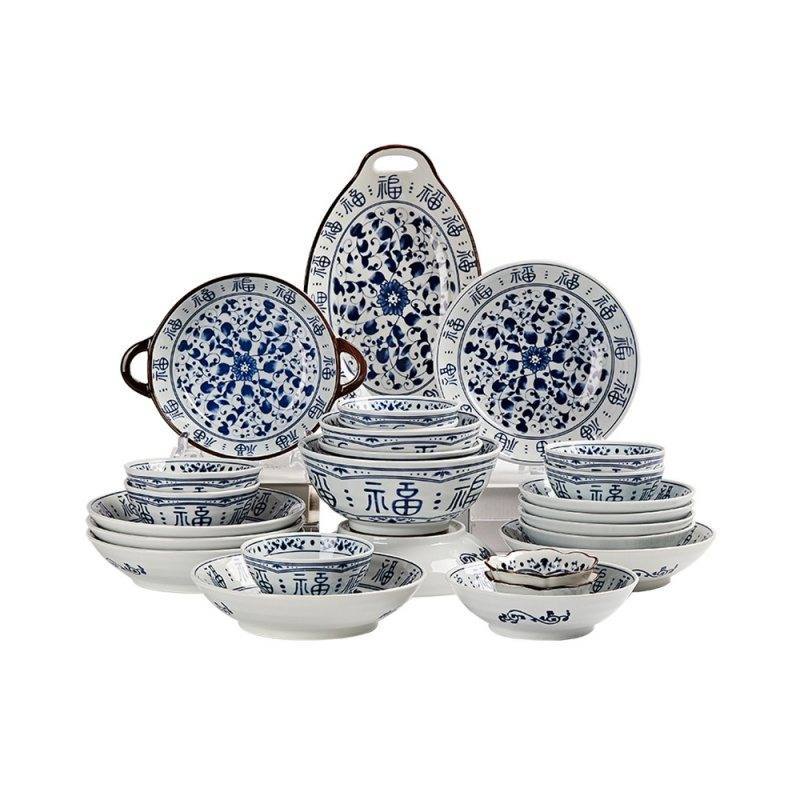
Products in this guide: Traditional Chinese Blue & White Dinnerware Set · Elegant Ceramic Chopsticks With Floral Patterns
Where This Fits in the Sourcing Chain
This is the replenishment rhythm applied to gifting rather than to staples, and it works on the same planning logic. The replenishment calendar maps the ordering windows for the whole year. Because capacity is booked in advance, the sequence also determines how long a quotation can realistically be held. The quote validity guide explains how to hold prices on long programs. The full chain follows the standard sourcing map. See the full ceramic sourcing process map.
The Dates, In Sequence
6 January — Three Kings (Epiphany) in Spain and much of Latin America. A gift-giving date in its own right, often larger than Christmas in those markets, with a warm, family-and-food design language. Orders are placed in the previous September and October.
6 February 2027 — Lunar New Year, celebrated in China, Singapore, Malaysia, Vietnam and Korea. The gifting that matters commercially here is the pre-holiday period, and in ceramic it competes directly with production capacity, because the same factory holiday closes the line.
7 February – 8 March 2027 — Ramadan, with Eid al-Fitr on 9-10 March, across the Gulf, North Africa and Southeast Asia. The design language is formal: deep colours, geometric or calligraphic motifs, and sets rather than singles.
14 February — Valentine's Day, global but retail-led. Pair sets, hearts, pastels, and a buying window that closes earlier than people expect.
20 March 2027 — Nowruz, the Persian New Year, observed across Iran, Central Asia and the Caucasus, with a strong table-centred gift tradition and a premium, spring-fresh visual language.
28 March 2027 — Easter in Western markets, and 7 March 2027 — Mothering Sunday in the UK and Ireland, ahead of 9 May 2027 — Mother's Day in the United States. Spring florals, pastels, and family sets.
16 May 2027 — Eid al-Adha, again in the Gulf and wider Muslim markets, and 20 June 2027 — Father's Day in the United States.
What the Sequence Is Worth
Three practical advantages follow from treating these as separate peaks. Production can be smoothed: a buyer serving several markets can sequence orders so that the factory is not asked to deliver everything in the same fortnight. Design language stops being generic: hearts sell to a Valentine's shelf and geometric gold sells to an Eid shelf, and a single "spring floral" range under-serves both. Sampling happens earlier: if the reference for a March gift date is approved in November, the programme has slack; if it is approved in January, it is a rush.
The Counter-argument, Stated Fairly
There is a real case for concentrating: fewer references, longer runs, simpler stock, and no risk of carrying four seasonal designs into next year. That approach works when the business sells to one market with one dominant gift date. It stops working as soon as the customer base is multi-market, because then a single calendar is not a simplification — it is a constraint imposed by the buyer's own planning.
The Habit That Ties It Together
The habit is to lay the year out as a market-by-market sequence rather than as a single peak, and to book capacity against the earliest date that matters. Programs that do this negotiate from a position of slack. Programs that do not spend the first quarter explaining why the price is high and the date is impossible.
Related Products
Explore products featured in this guide:


Have questions? See our Sizes & Finishes FAQ and Ordering & Certifications FAQ.
Need a custom quote? Send an inquiry or browse our full product catalog.