Weight and Handfeel: The Specification Nobody Writes Down
- Share
- Issue Time
- Sep 17,2026
Summary
Two mugs can share every measurable dimension and still feel completely different. Weight, balance and wall thickness decide perceived quality — and they are almost never specified.
The Problem: A Specification That Exists Only in the Hand
Buyers compare capacity, height, diameter and decoration. Almost nobody puts a figure on weight, and yet it is the first thing a customer notices. A mug that is lighter than expected reads as cheap; one that is heavier than expected reads as solid — up to the point where it reads as clumsy. Because the judgement happens in the hand rather than on a drawing, and because it is made in under a second, weight is one of the strongest drivers of perceived quality in the entire category. It is also one of the easiest things to specify, once a buyer accepts that it is a specification at all.
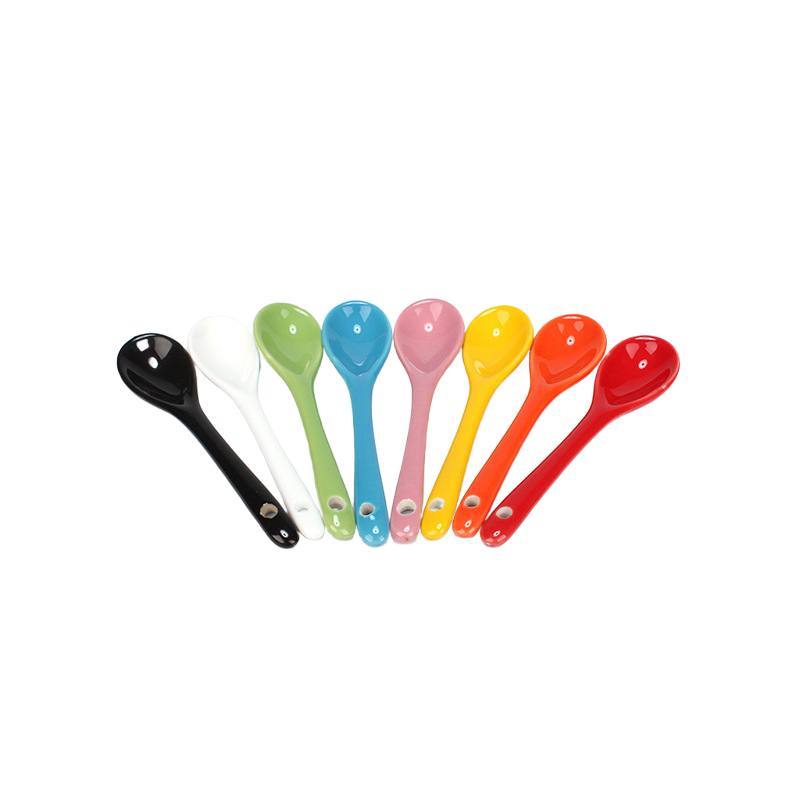
Products in this guide: Colorful Ceramic Spoon · Artistic Ceramic Spoon
Where This Fits in the Sourcing Chain
Weight and balance are decided by wall thickness, base diameter and handle geometry — all of which are fixed at the sample stage and expensive to change later. The spec freeze guide explains how artwork and packing files are locked between orders. Because they are perceived rather than measured by the customer, they should be recorded on the specification and on the sample. The full chain follows the standard sourcing map. See the full ceramic sourcing process map.
What Actually Drives the Impression
Total weight. A mug in the 300–400 ml range is usually judged between roughly 280 g and 400 g. Below that range it feels insubstantial; well above it, the piece becomes tiring to hold when full.
Balance, not just weight. A heavy base with a light wall feels stable; a light base with a thick wall feels top-heavy and insecure, and a full cup of liquid amplifies it. Balance is a function of where the mass sits, which is a design decision.
Wall thickness at the rim. A thin rim reads as refined; a thick rim reads as robust. Neither is wrong, but the two carry different price points and different expectations.
Handle geometry. A handle that is generous enough for a full grip suggests quality regardless of the body; a shallow handle that only fits two fingers suggests the opposite, even on an excellent mug.
Surface texture. A slightly matte, warm glaze is perceived as more substantial than a slick gloss of the same weight — a measurable effect that photographs cannot convey.
How to Specify It
Three practical steps. Weigh the approved sample and record the figure in grams with a tolerance of plus or minus a small percentage, because yield varies. State the wall thickness at the rim and the base, since these are the two points a customer touches. Record the balance in a sentence: where the mass sits, and whether the piece stands firm when full. A specification sheet with these three items prevents the most common disappointment in the category — a second order that is "the same" and feels wrong.
Why It Matters Commercially
Weight and balance are what a customer will describe when asked why they like a mug, and what a reviewer will mention in a single sentence that sells a hundred units. They also form the cheapest quality upgrade available: a body can often be made to feel more substantial by adjusting thickness and base diameter at the design stage, at little extra material cost — and the same adjustment in the opposite direction reduces freight weight. That trade-off, made deliberately, is worth more than any decoration discussion.
The Habit That Ties It Together
The habit is to treat what the hand perceives as a specification, and to write it down. Programs that do this sell pieces that feel right on the first touch and identical on the fourth order.
Related Products
Explore products featured in this guide:


Have questions? See our Sizes & Finishes FAQ and Ordering & Certifications FAQ.
Need a custom quote? Send an inquiry or browse our full product catalog.