What Can Actually Be Personalised in a Gift Mug Order
- Share
- Issue Time
- Sep 13,2026
Summary
Buyers often assume personalisation is a small add-on. In production it is a separate decision with its own minimums, proofs and lead time. This guide explains what is genuinely possible, what is not, and the structure that delivers a personalised gift at a bulk price.
The Problem: "Just Add Their Name" Is a Production Decision
The request sounds incremental: the same mug, with the recipient's name or photo on it. In a factory, personalisation is not an increment — it is a change of production logic. Each unique artwork requires its own proof, its own position check and its own print setting, and the minimum quantity attaches to the artwork rather than to the mug. Understanding that distinction is what separates a personalised gift programme that ships at a sensible unit price from one that quietly becomes the most expensive line in the range.
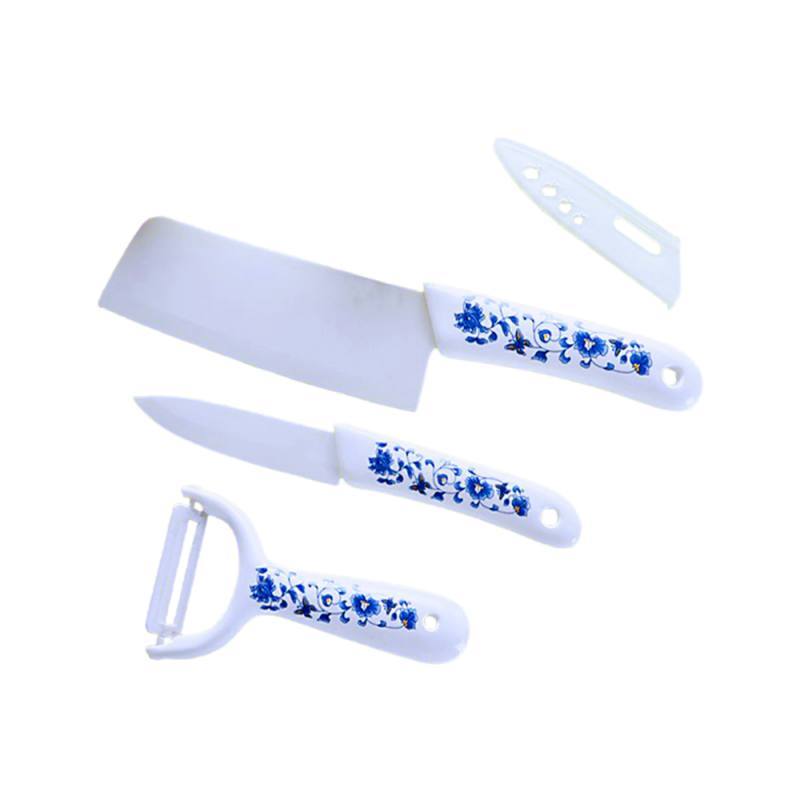
Products in this guide: 3-Piece Ceramic Knife Set · 7-Piece Ceramic Knife Set
Where This Fits in the Sourcing Chain
Personalisation lives inside the frozen artwork specification, because every personalised element has to be proofed and approved before it can be printed. The spec freeze guide explains how artwork and packing files are locked between orders. It also changes the packing, because a personalised item usually ships in a gift box rather than a bulk carton. The packaging guide explains how retail-ready and protective layers are specified together. The full chain follows the standard sourcing map. See the full ceramic sourcing process map.
The Techniques and What They Allow
Decoration printing — screen, transfer or decal — reproduces artwork, logos and illustrations on a curved surface, and is the basis of most custom mug programmes. One artwork per production run, with a minimum quantity attached to each.
Sublimation works on a coated blank: the artwork is transferred under heat and becomes part of the surface. It is the natural route for photo imagery and full-colour gradients, and it is what most photo-mug concepts actually use — on a white or light blank.
Engraving and debossing produce a permanent, tactile mark without colour, and suit restrained corporate marks rather than photographic images. (For a comparison of engraved against embossed and debossed finishes, see our separate note on logo finishes.)
Name and text printing is simply artwork printing where the artwork happens to be a name — which means each different name is a different artwork, and is priced and proofed as one.
Three Assumptions Worth Discarding
"One-off is the same as one hundred." It is not: the artwork preparation cost is largely fixed, so a single personalised piece carries the whole preparation on one unit. Personalisation becomes economical when the *design* is shared and only the variable element changes in a planned sequence.
"Any photo will print." Print quality follows image quality. Low-resolution, badly lit or compressed phone images reproduce exactly as they are — soft and grainy — and no production improvement recovers detail that is not in the file. Buyers running photo programmes should specify a minimum resolution rather than hoping.
"The colour will match our brand exactly." Decoration on a fired, glazed surface is not a paper print, and the glaze underneath affects the result. A near-match is achievable and a precise one is a conversation to have before production, with the approval on a fired physical piece rather than on a screen.
The Structure That Delivers Personalised Gifts at Bulk Price
The workable model separates the product from the personalisation layer. The mug, the body and the base decoration stay standard — one artwork, one production run, production minimums respected. What varies is the layer that carries the individual element: a printed sleeve, a gift box with a personalised label, a printed card or a gift tag. Presentation is where per-piece variation is genuinely affordable, and it is what the recipient actually sees when the box is opened. Buyers who adopt this structure get both: a personalised gift experience and a unit cost that survives a retail margin.
The Habit That Ties It Together
The habit is to ask, before promising personalisation, which element varies and who proofs it. Programs that do this offer personalisation as a designed feature with a known cost. Programs that do not discover that the promise was easy to make and expensive to keep.
Related Products
Explore products featured in this guide:


Have questions? See our Sizes & Finishes FAQ and Ordering & Certifications FAQ.
Need a custom quote? Send an inquiry or browse our full product catalog.