Whiteness and Translucency: How to Specify What the Body Looks Like
- Share
- Issue Time
- Sep 21,2026
Summary
Two properties describe a ceramic body before any glaze is applied — how white it is and how much light passes through it. Both change how a print reads, what a set looks like together, and whether a replacement piece will match.
The Problem: The Body Is Chosen by Eye and Described by Nothing
A buyer approves a sample, and the sample happens to be a bright, cool white. The next production run arrives in a creamier tone. Nothing in the specification mentions the body's colour, because the specification says "ceramic" and states a capacity — and the difference, while small, becomes obvious the moment a print sits on the surface or a second body enters the same range.
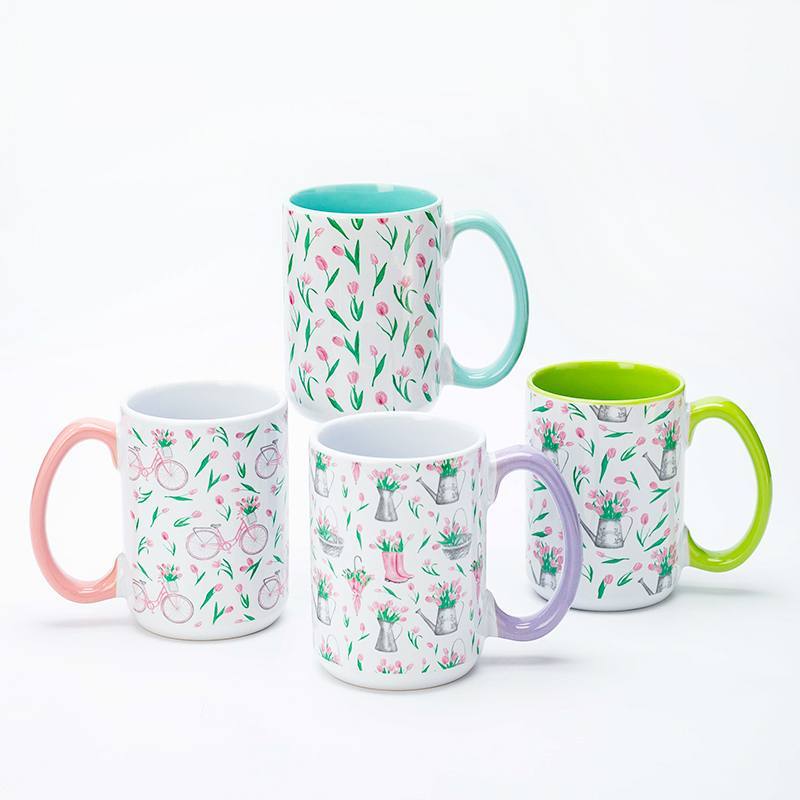
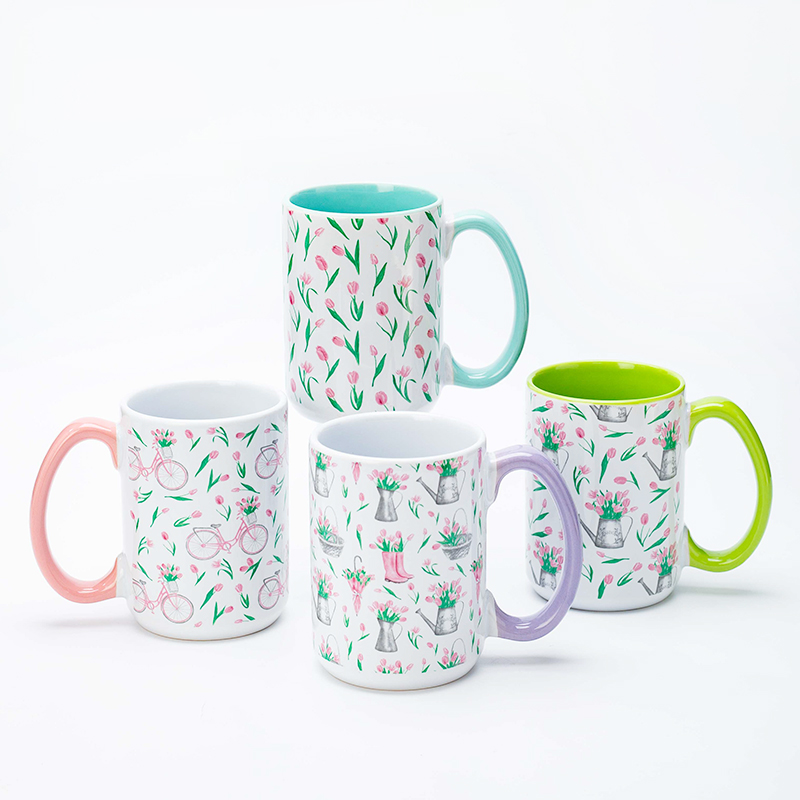
Products in this guide: Ceramic Decal Printing Fresh Floral Ceramic Coffee Mugs - Elegant Floral Pattern · Ceramic Decal Printed Easter Bunny Tall Ceramic Mugs - Tall Shape
Whiteness and translucency are the two properties that describe the body itself, and both are usually left out of specifications. The consequences are specific: a decoration that reads differently on a different body, a set that looks mismatched, a replacement piece that does not match the set it belongs to, and for the buyer, an argument that cannot be settled because no standard was ever defined.
What Determines Them
Body composition. Iron and titanium content are the classic determinants of whiteness: more of either produces a warmer, darker body. This is why porcelain, bone china and stoneware sit in visibly different places, and why a body reformulated for cost can shift tone even when nothing else changes.
Firing temperature and atmosphere. Higher firing generally increases vitrification, which raises both whiteness and translucency in the right body. Atmosphere matters too: an oxidised firing and a reduced firing of the same body do not look identical, and reduction can shift a white towards a warmer or slightly grey tone.
Wall thickness. Translucency is largely a function of thickness: the same body reads as substantially more translucent in a thin wall than a thick one. This is why a translucent-looking espresso cup and an opaque mug can be made from the same body.
Grain and porosity. Finer particle size and lower porosity both increase light transmission, which is why high-quality porcelain reads as more luminous than a coarser stoneware of the same colour.
How to Express Them, Practically
Two properties, two workable approaches, neither requiring a laboratory.
Whiteness. The reliable method is comparison against a physical standard: a sealed fired sample of the approved body, held by both parties — the same discipline used for glaze colour. Numerical whiteness values exist and are used in some factories, and they are useful as a control record, but the practical acceptance is a visual comparison against the retained standard under defined light, because the customer judges with an eye.
Translucency. Judged by placing the piece against a defined light source and comparing against a standard piece, or by viewing a shadow through a wall at a defined distance. It is a comparative judgement rather than a number, and it should be made on the same measured wall thickness, because thickness alone will explain most of the difference between two otherwise identical pieces.
Where decoration is involved, the standard should be tested with the artwork. A print looks different on a cool white and a warm cream, and the difference is sometimes enough to change the perceived colour of the ink itself. The right time to discover that is with the sample, not after the container arrives.
Why It Matters Across a Range
Three situations where the body becomes a commercial issue rather than an aesthetic one.
A set assembled from different items. A dinnerware set made from one body reads as a set; a set made from two bodies reads as a collection. Where a range includes items made on different lines or at different times, the body standard becomes the thing that keeps the set coherent.
A replacement piece ordered later. Open-stock replacement is one of the strongest forces keeping a range alive, and the replacement only works if the body is the same — not merely close. This is precisely why the body is a named, specified item rather than a description.
A private-label range compared with the buyer's own product. Where a buyer sells two white ranges from two suppliers, the difference in body tone is one of the first things a customer notices, and it is not fixable at the retail end.
The spec freeze guide explains how artwork and packing files are locked between orders.
What to Specify
Four lines.
- The body named, with a clause requiring approval and re-testing before any change in composition or supplier.
- A retained body standard: a sealed fired piece of the approved body, held by both parties, dated and signed.
- The viewing condition for comparison, so that whiteness is judged consistently: a stated light source and a stated viewing distance.
- A translucency expectation where it matters, expressed as a comparison against the standard at a stated wall thickness — or, if translucency is not required, stated as a non-requirement so that a supplier does not over-engineer it at the buyer's cost.
The packaging guide explains how retail-ready and protective layers are specified together.
What to Ask a Supplier
Five questions.
- Which body is this, by name, and has its composition changed in the last two years?
- Is there a retained fired standard of the body I can hold, so we both compare against the same thing?
- On a thin-walled item, how much translucency should I expect, and against what reference?
- If I combine items across two lines, will the body be identical — and if it is merely similar, how similar?
- If I reorder in eighteen months, will the replacement come from the same body?
The Habit That Ties It Together
The habit is to treat the body as a named, standard-held component rather than as a background material. Programs that do this sell ranges that look like sets, replacements that match, and decoration that reads the way it was approved.
Related Products
Explore products featured in this guide:



Have questions? See our Sizes & Finishes FAQ and Ordering & Certifications FAQ.
Need a custom quote? Send an inquiry or browse our full product catalog.