Blog
All
Expert Knowledge
Industry Insights
Ceramic Mug Manufacturing Guide

All

How to Partner with a Ceramic Mug Factory for Bulk Custom Dinnerware and Mugs

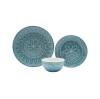
This comprehensive guide provides an essential roadmap for successfully partnering with a ceramic mug factory to produce custom dinnerware and mugs. It targets businesses, cafes, and individuals seeking to create personalized, high-quality ceramic items. The article underscores the critical need for a clearly defined vision, advising detailed specifications for design, material, size, color, quantity, and budget before engaging with manufacturers. It also explores key material options like porce

Jun 11,2026

How to Partner with a Ceramic Mug Factory for Bulk Custom Dinnerware and Mugs

Exiting a Supplier Without Breaking the Programme

Every sourcing relationship ends eventually — through price, capacity, quality or a change of ownership. The cost is decided by how well the exit was planned, and most of that cost falls on the buyer.

Sep 19,2026

Exiting a Supplier Without Breaking the Programme

When the Buyer Sells Direct: What It Changes in the Specification

Retailers, distributors and even restaurants increasingly sell to consumers themselves, online or through their own shops. That shift moves requirements out of the warehouse and into a parcel — and it changes what a supplier should pack and supply.

Sep 19,2026

When the Buyer Sells Direct: What It Changes in the Specification

The 90-Day Check-In: Finding Out How a Programme Is Actually Going

By the time a buyer and a supplier notice a problem, it is usually two seasons old. A short, scheduled conversation after the first delivery — and once a year after that — catches almost everything early.

Sep 19,2026

The 90-Day Check-In: Finding Out How a Programme Is Actually Going

The ATA Carnet: Moving Samples and Display Pieces Without Paying Duty Twice

Ceramics travel to trade fairs, sample rooms and buyer meetings — and come home again. The ATA carnet is the document that lets them do it without import duty or a cash deposit, provided it is used properly.

Sep 19,2026

The ATA Carnet: Moving Samples and Display Pieces Without Paying Duty Twice

Export Tax Rebates: Who Claims Them, and Why Your Price Depends On It

In most exporting markets, part of the tax paid along the supply chain is refunded when goods leave the country. Who is entitled to claim it decides whether a quotation is competitive — and it is rarely explained in the offer.

Sep 19,2026

Export Tax Rebates: Who Claims Them, and Why Your Price Depends On It

Warehouse and Stacking Efficiency: Where Quiet Damage Happens

Ceramic stock spends more time in a warehouse than on a shelf, and it is there that much of the damage begins. Carton strength, stack height, pallet patterns and rotation are specification decisions, not housekeeping.

Sep 19,2026

Warehouse and Stacking Efficiency: Where Quiet Damage Happens

The Buying Decision Chain: Selling to Everyone Who Says Yes

A ceramic order is rarely one person's decision. Design, technical, commercial, finance and approval each hold a different piece of the answer — and a proposal that satisfies only the person who emailed tends to stall.

Sep 19,2026

The Buying Decision Chain: Selling to Everyone Who Says Yes

Production Visibility: The Milestones That Stop Buyers Chasing

Between an order and a shipment there is usually silence, and silence is what turns a good supplier into a chased one. Reporting a small set of milestones costs an hour and removes most of the friction in a programme.

Sep 19,2026

Production Visibility: The Milestones That Stop Buyers Chasing

Enabling the Buyer's Team: What Makes a Product Sell After It Lands

A supplier's job does not end at the port. The programmes that get reordered are the ones where the buyer's sales team understood the product — because a product nobody can explain sells slowly, and slow sellers get dropped.

Sep 19,2026

Enabling the Buyer's Team: What Makes a Product Sell After It Lands

Running a Sample Review: The Meeting That Decides Six Months of Production

A sample review is where a range is actually chosen — and where most projects lose a month to vague feedback. The fix is structure: prepared samples, a scoring basis, one decision-maker and a written outcome.

Sep 19,2026

Running a Sample Review: The Meeting That Decides Six Months of Production

Sample Fees and Sampling Policy: Charging for the Work Without Losing the Buyer

Samples are the most expensive thing a factory gives away, and the most common cause of a stalled enquiry. A stated policy costs less than an improvised one — and converts better than a free sample that arrives late.

Sep 18,2026

Sample Fees and Sampling Policy: Charging for the Work Without Losing the Buyer

Packaging Cost Engineering: Judging the Box by What It Saves

Packaging is usually the first place a buyer looks for savings and the last place they measure properly. The right question is not what the box costs but what it saves — in freight, in breakage, and in labour.

Sep 18,2026

Packaging Cost Engineering: Judging the Box by What It Saves

Account Tiering: Deciding Who Gets the Sample Budget

Every buyer wants the same attention, and no supplier can afford to give it. Tiering accounts is the discipline of deciding in advance who gets the sampling budget, the production slot and the fast reply.

Sep 18,2026

Account Tiering: Deciding Who Gets the Sample Budget